
Only When a Person Jumps His Feet Is the Prayer Accepted!
The Daily Lesson from Rabbi Eliezer Berland shlit"a
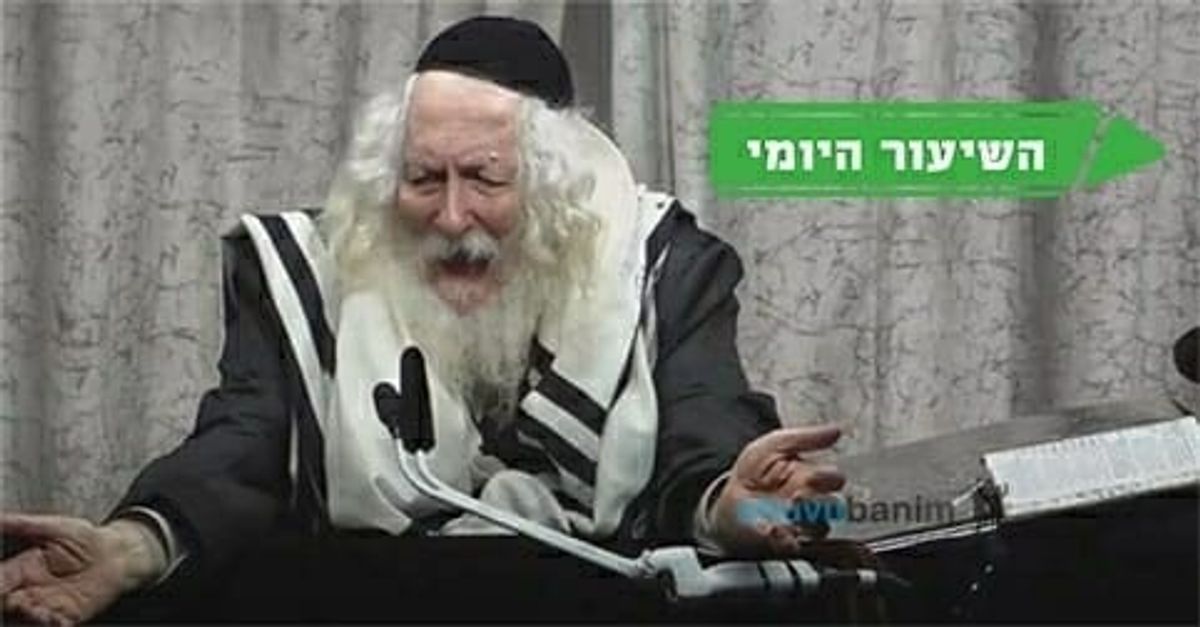
Below is the full lesson as delivered by The Rav, Rabbi Eliezer Berland shlit"a, last night—Tuesday night, the eve of the 22nd of MarCheshvan—after the evening prayer (Ma’ariv):
So the Imrei Emes asks: Why—after he had already killed—after he killed four groups of fifty men, and then another four hundred—after that, a poor officer came with fifty soldiers, and he killed him too; and then another officer and another fifty. He just kept killing and killing and killing. So why didn’t he kill Izevel—why didn’t he slaughter her already? She murdered all the prophets, all the prophetesses—there were six hundred thousand prophetesses.
Once, every woman was a prophetess. Every woman yearned for the Kosel. From Tzipori, from Meron, from Kfar Shammai—she would fly through the air, every woman. And they already came—and flew back—before the sun even rose over the fig trees. Because before the figs would spoil, she would pick the figs and send the children off to the chedarim. All the tender trucks would be standing below and wouldn’t see a single child—they wouldn’t understand what was happening. Twenty tender trucks would arrive to take them to the chedarim, and still not one child was on the road. Suddenly they would see a cloud approaching—a black cloud, blacker than black—and it would become complete darkness. And suddenly they would think: any moment now rain will fall—thunder and lightning. Suddenly [they see] the cloud breaks apart, breaks into pieces, and children come out—girls come out of that cloud. Little girls, three, four, five years old, and they go into the chedarim. And they dress their brothers—their little boys. Because she must immediately prepare—dress the small children, dress them right away, put a sandwich into each one’s hand: in the left hand a sandwich, in the right hand The Tikkun HaKlali. So he’ll manage to say The Tikkun HaKlali until the tender arrives, and then another Tikkun HaKlali while he’s riding in the tender, and then another Tikkun HaKlali until the cheder—three times The Tikkun HaKlali they need to manage to say in the morning, immediately—every one of them, all the children. And the clouds break apart.
So why didn’t he slaughter Izevel? He slaughtered everyone without mercy—eight hundred and fifty men, and another hundred and two people—fifty soldiers and a sweet officer, and another fifty soldiers and another sweet officer. They weren’t in the IDF; they were from Tzadal. They were from the Christian Arabs—Tzadal is the South Lebanon Army. They were from southern Lebanon, that’s who they were. And it was forbidden to kill them, but Eliyahu HaNavi killed them all—he didn’t distinguish. So why leave Izevel alive? Because she dances—every time she sees a groom, she jumps. “In the place where the dogs licked the blood of Navos” (I Kings 21:19)—there they will lick your blood; there [they will lick] the blood of Izevel. And then they threw her into the plot of Navos; there they licked the blood, and they ate her flesh—except for the soles of her feet. The soles of her feet—because she would jump with her feet.
“And it will be eikev” (Likkutei Moharan 169)—each time a person needs to jump his feet. Only if a person jumps his feet is the prayer accepted. Someone who doesn’t jump his feet—his prayer is not accepted. Immediately after the prayer one must jump his feet—detach from the globe of the earth, detach from the ground—and clap hands, and do a little with the head. So that is what remained (from Izevel, who would dance and clap before the groom and the bride).
https://www.youtube.com/watch?v=2AZVJS1xMNs
The lesson begins at 1:10:27
Subscribe to Our Newsletter
Receive Torah articles and inspiration directly in your inbox