
Parashat Tzav - The Secret of the Eternal Fire and True Enthusiasm
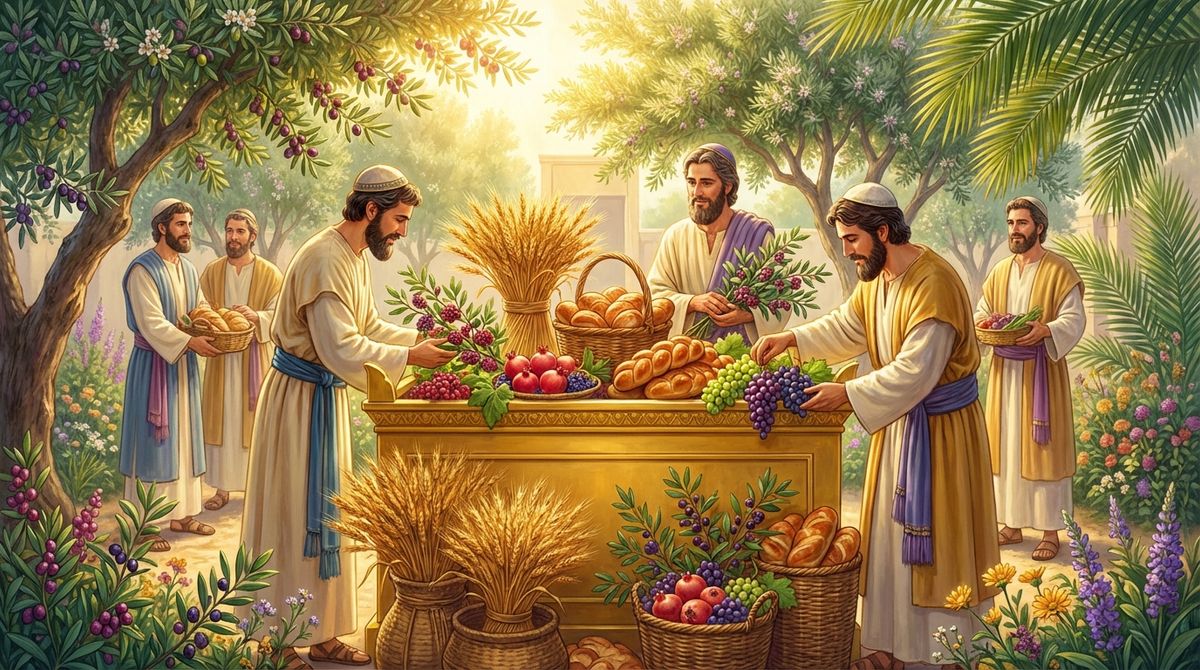
The Secret of the Eternal Fire: The Superiority of the Soul over the Angels
"A constant fire shall be kept burning on the altar; it shall not be extinguished" (Vayikra 6:6)
The soul comes from the supernal realms; the soul descended to the world to withstand tests, "The soul that You gave me is pure...". The soul is higher than the angels; it was created before the angels. In the future to come, everyone will have dominion over the angels. Angels cannot ascend from level to level; rather, exactly as Hashem created them at the beginning of creation, so they remain for all eternity. But a person, in order to ascend from level to level, must take all the lusts burning within him and transform them into flames of fire, "A constant fire shall be kept burning on the altar; it shall not be extinguished" - into flames of fire for Hashem, blessed be He. For this purpose, the soul was created, and therefore it is greater than the angels.
Fleeting Enthusiasm vs. Inner Fire
The Rebbe (Rebbe Nachman) says in Torah 158: "Many people have recounted that they sometimes saw a fire burning from afar, and they approached it - and there was nothing... Similarly, there are some people whose hearts sometimes burn for Hashem, blessed be He, and they begin in the service of Hashem, blessed be He, and after an hour it is nullified and they return to their previous state...". A person has enthusiasm, he has fire, and afterward, the enthusiasm fades. Why did my enthusiasm fly away? Why did my enthusiasm fade away? Why did it evaporate? I came with such innocence, enthusiasm with such warmth, a blazing fire for Hashem, and suddenly it disappeared, it was taken from me, I didn't sin, I didn't commit iniquity, I didn't transgress.
Rebbe Nachman says that this was nothing, it was an illusion, it is not called enthusiasm at all. It is a good thing, a good point that there is enthusiasm, but nothing more than that. If a person wants to reach true enthusiasm, warmth of the heart in prayer, warmth of the heart in learning - this is very, very deep work. Reb Noson says: Any enthusiasm a person has is just a fleeting illusion (urva parach). It is good that a person is enthusiastic, it is better than being a block of wood, a piece of stone, but it will not help him at all until he acquires inner enthusiasm - enthusiasm with da'at (knowledge/awareness), enthusiasm with depth, with deep intellect.
A person should know that he needs to reach a deep inner enthusiasm that will be "A constant fire shall be kept burning on the altar; it shall not be extinguished," a constant fire that will not cease. A person thinks he has enthusiasm... that's it, he will already be Moshe Rabbeinu, within a day he will see Eliyahu HaNavi. But if he knew that the enthusiasm would slowly fade away, fly away, then he would start to delve deeper. And this is what Rebbe Nachman says, that sometimes a person's heart burns for Hashem, blessed be He, and he begins serving Hashem, he is enthusiastic, happy, dancing. Truly, there is what to dance about, there is what to rejoice about, there is what to dance about for 120 years without stopping.
A person did teshuvah (repentance), came from here, came from there, left all the idolatries... Baruch Hashem, certainly this is a joy - "I rejoice over Your word like one who finds great spoil." But how much can one dance for a day or two if it is not a constant fire? If it is not an inner fire, if he does not work on his character traits in depth, learn Gemara in depth, if he does not work on "and you shall take it to your heart," then nothing will help him. He does not make a hole in his heart, he does not make a place for the fire to take hold, so that he will have a constant fire.
The Power of Torah Study to Ignite the Heart
A person is burning, what are you burning about? Is this a true burning? Is this a true burning from the depth of the heart? After all, it is a burning for a moment. You have boiling blood right now, stormy blood, so you are burning for Hashem. Soon the blood will quiet down, the burning will end, and that's it. One burns for a month, one for a year, but after that... it's over. The Rebbe says in Torah 21 that the flame of the heart should rise on its own. How does one reach the flame of the heart? What ignites the heart? What ignites the heart is only the intellect; what moves the heart is the movement of the intellect. A person thinks, understands the Gemara deeply, then the intellect moves and gives birth to heat in the heart.
If a person wants to have the intellect so that the flame rises on its own, to have fire in his heart, to have a true burning, the first thing he must do is to strive with all his might to start learning Torah. And to know that what Rebbe Nachman wants from us is only the intellect, because only the intellect will purify the heart, only the intellect can bring us enthusiasm of the heart, to bring us purity to the heart. If there is no intellect, if there is no in-depth study, then a person is enthusiastic for a day or two and after that he can fall such falls, he doesn't know where these falls come from. So everything that comes to a person without Torah study, all these things, all these enthusiasms, they immediately disappear. And only when a person learns Torah and truly delves deep, will he merit true enthusiasm and merit "A constant fire shall be kept burning on the altar; it shall not be extinguished."
Holiness: A Demand for Perfection and Separation
Holiness is something that doesn't ring bells; it is something so delicate and simple that one can barely notice it. But its powers are immense.
"You shall be holy, for I am holy"
Do not do such and such, such and such is forbidden to you, for I am holy. All the time, for I am holy. Meaning, if I am holy, I want you to be holy too. Not that Hashem is in heaven and we are on earth. Here we need Hashem! We need Hashem in our lives to help us, we need Him to give us joy, we need Him to give us parnassah (livelihood), we need Him to give us da'at, to give us, to give us, to give us. Rather no, there is a calling here that obligates us even though we are all so far from perfection.
Hashem uses the word holiness. And holiness is perfection. In holiness, there are no compromises. Holiness is not something that happens slowly, bit by bit. Holiness is something that cannot be measured. It is something hidden, even though it bursts outward. It is an absolute concept. It is much greater than purity. Purity - there is impurity, so one purifies oneself, leaves the impurity and reaches purity. It is an intermediate state. But holiness is an absolute concept. And Hashem does not give up. He does not think we are weak, He does not think we are incapable, He is not willing to compromise.
He says all the time: You shall be holy, for I am holy. What kind of comparison is this? We are, after all, flesh and blood, with our evil inclination, with our tests, what are we?! Hashem is not willing to compromise, not willing to accept any compromise. I am holy, so you descended from Me, and your entire reality is by My power, and everything I created you for is for My honor, and what I want from you is holiness. And holiness, everyone can try for themselves to examine themselves, to try to decipher this word, but one thing is clear to everyone: that the word holiness means separation. This does not belong to me, and this does belong to me.
Moshe's Prayer for Aharon
The Sages expounded in their Midrash:
"And love covers all transgressions" (Mishlei 10:12)
The prayer that Moshe prayed for him (in his love for Aharon) - it is what covered all of Aharon's transgressions. And what did Moshe pray? From the beginning of the book until here it is written, "And the sons of Aharon shall arrange, etc." (and no service was mentioned regarding Aharon himself, only his sons). Moshe said before Hashem: Is the well hated but its waters beloved? You accorded honor to trees for the sake of their children (their fruits), and so we learned there in the Mishnah: All woods are valid for the arrangement (of fire on the altar) except for olive and grapevine (since their fruits are brought for libations on the altar, oil libations and wine libations, therefore it is not right that the tree that grows these fruits should be burned on the altar), and to Aharon You do not accord honor for the sake of his sons?!
Hashem said to him: By your life, for your sake I am drawing him near, and not only that, but I am making him the primary one and his sons secondary. This is what is stated here: "Command Aharon and his sons, saying, this is the law of the burnt offering, etc." (Sefer HaParshiyot).
The Virtue of One Who Recognizes His Sin: Holy of Holies
"And this is the law of the guilt offering; it is most holy (holy of holies)" (Vayikra 7:1)
It is known that when a person sins, and knows that he has sinned, it is considered for him as if he has begun to do teshuvah (repentance), since he knows he sinned, and he certainly feels great sorrow over it, and regrets his iniquity, and returns and is healed. But a person who sinned, and does not know and does not feel that he sinned, his iniquity is multiplied manifold, since he will never do teshuvah (repentance), for he certainly thinks of himself that he is a tzaddik and a pious person, and he has nothing to do teshuvah (repentance) for, and as the verse says (Yirmiyahu 2:35): "Behold, I will enter into judgment with you because you say, 'I have not sinned.'"
And this is what the verse says: "And this is the law of the guilt offering (asham)" - a person who feels himself at every step and turn that he is guilty (asham) and a sinner, then "it is most holy (holy of holies)" - this person is considered the "holy of holies," since all his days he is in regret and pangs of conscience, and he will certainly make every effort in his power, and will not return to folly (to sin).
The Love for Torah and the Temple of Rabbi Aharon of Belz
"And the kohen shall cause all of it to go up in smoke on the altar, a burnt offering, a fire offering, a pleasing fragrance to Hashem" (Vayikra 1:9)
The tzaddik Rabbi Aharon of Belz was orphaned from his mother when he was a baby of about three. Most of his childhood years he spent in the home of his grandfather, Rabbi Yehoshua, and learned from him the ways of Torah and Chassidut. While still a tender young child, Ahrele once entered his grandfather's room, Rabbi Yehoshua, and asked him to give him a silver coin in each of his hands. Rabbi Yehoshua asked him affectionately: Why do you need silver coins? Are you lacking anything in my house? The child replied while clinging to his grandfather: I want to collect a large sum of money for myself.
And what will you do with the money you collect? - asked Rabbi Yehoshua, as he tenderly hugged his grandson. I will buy books with the money - the child replied with a tone of cheerfulness. Which books do you intend to buy? Rabbi Yehoshua continued to ask, filled with admiration at the surprising request of his tender-aged grandson. Books that have already been authored, and books that will be published in the future - the child replied in a sing-song voice, and added casually: I really love books!
Rabbi Yehoshua stroked his right hand over his grandson's head, and exclaimed: And what will you do with your money when Mashiach comes, and no more books will be authored? Little Ahrele pondered for a brief moment, and then said: When Mashiach comes, the Holy Temple will be built, and then I will buy sacrifices with my money. Rabbi Yehoshua was very moved by the perceptions of his beloved grandson, and handed him a handful of coins, saying: These coins are due to you for the words of wisdom you just voiced to me. May you merit to buy sacrifices with this money for the service of the Creator, blessed be He... (Bnei Tzion)
And Break Off Your Sins with Charity: Practical Atonement for Iniquities
The tzaddik Rabbi Levi Yitzchak of Berditchev once happened to be at a seudat mitzvah (mitzvah feast), and his eyes fell upon one of the wealthy men of the city, who had a reputation as a miser, who closed his hand to any act of charity. Rabbi Levi Yitzchak approached that wealthy man and began to rebuke him with words, for withholding himself from the mitzvah of charity, through which one can atone for every sin and iniquity. The wealthy man interrupted the words of the tzaddik of Berditchev, and called out haughtily: I have a cheaper way to atone for iniquities and sins without giving charity. For the early sages have already taught us that prayer in this time was established in place of the sacrifices, which atone for the iniquities of Israel, as it is written: "And let our lips substitute for bulls" (Hoshea 14:3). And behold, you should know that all my days I am careful with the daily prayers, and from the day I reached maturity, I have not missed even one prayer with a minyan (in public).
May a blessing come upon you! - called out Rabbi Levi Yitzchak in his heartwarming voice. However, the truth is, that the Sages who established "prayer in place of a sacrifice" only intended it for the daily Tamid offering. But obligatory sacrifices, which a person was commanded to offer in order to atone for his sins - those cannot be substituted with prayer, but only with acts of charity and loving-kindness, as brought in the Book of Daniel (4:24): "And break off (redeem) your sins with charity." And not only that, but it is proper to precede prayer every day with an act of charity, as told in Tractate Bava Batra (10a): Rabbi Eliezer would give a prutah (coin) to a poor person, and afterward he would pray, for the verse says: "I, in righteousness (tzedek/charity), will behold Your face" (Tehillim 17:15), and Rashi explains: "I, in righteousness" (with an act of charity) first, and afterward "will behold Your face" in prayer...
A Prayer to Merit a Desire for Torah Study
Master of the Universe, full of compassion, Omnipotent One, from Whom no purpose can be withheld (Master of the Universe), open my intellect and my mind (that they should be open) for the study of Your Torah, and may I merit a tremendous desire to learn Torah without ceasing, day and night, and no thing in the world will be able to stop me from the study of the Torah, and may I feel the joy of the Torah and the love of the Torah in all my 248 limbs and 365 sinews, and may all my limbs be satiated and delight from the study of the Torah, and through this may I burn for You with a flaming fire, and I will not want anything from the matters of the world, I will only want You, as it is written: "As a deer pants for streams of water, so my soul pants for You, O God."
Subscribe to Our Newsletter
Receive Torah articles and inspiration directly in your inbox