Rabbi Eliezer Berland Shlit”a on his Way to Uman
Riveting Interview with his Grandson and Assistant
On Tuesday, 7 Elul, Moreinu HaRav Eliezer Berland shlit”a unexpectedly began his journey to Uman in preparation for the Rosh Hashanah gathering of 5785. At the beginning of the week, the Rav’s grandson and assistant gave an interview to the Breslov Information Line (Kav HaMeda - *9148) in which he answered questions about why Moreinu HaRav shlit”a left for Uman early, about his state of health while travelling, and he also gives a special account of the previous Shabbat – Shabbat Ki Tetzei – spent in the company of Moreinu HaRav shlit”a on his way to Uman. Here is the full interview:
First of all, why did the Rav hurry and leave so early? The truth is that this depends on the Rav himself. In the last few months, he expressed his desire a number of times to travel to Uman early this year, so we did as he wished. We know that the Rav shlit”a left his home on Tuesday, 7 Elul. Until Friday, the media was quiet. There was Heavenly assistance in managing in keeping it a secret. Baruch Hashem, Hashem looks after the Tzaddik and arranges everything so that it will be according to what is needed. At the Rav’s age, how does he feel healthwise when not at home? Baruch Hashem, the Rav feels well. Last week, there was a certain medical problem which developed. Of course, immediately the appropriate medications were brought. The Rav is under medical supervision at all times by his on-hand doctors, like at home. Baruch Hashem, the problem was worked out, but understandably this is the place to arouse people to pray for Moreinu HaRav shlit”a. At such an age, any small problem can become complicated and requires monitoring. But Baruch Hashem, at the moment, the Rav feels well. You spent Shabbat “Ki Tetzei” in the company of Moreinu HaRav shlit”a. We would like to hear how the Shabbat went in his holy company? Baruch Hashem, as everyone knows, the Rav remains himself in every place, and it doesn’t matter how many people he is found with. The Rav sang all the prayers, whether Kabbalat Shabbat -- “Lecha Dodi” -- at length, and likewise, at the Shabbat meals, all the songs and he didn’t relent on any niggun. In particular, he repeated “Shalom Alechem,” and likewise “Y-ah Ribon” in the section “Ravevin” according to his holy custom on every Shabbat. On the Shabbat evening meal, he intended to finish the meal already and began “Shir HaMa’alot.” He then remembered that he didn’t say Torah at the table. Then Moreinu HaRav shlit”a began to speak about Parashat “Ki Tetzei,” and said that “Ki Tetzei” is the numerical value of “Chatan V’Chalah (groom and bride),” that “bride and groom” is called to “go out to war.” The Rav even mentioned the holy Or HaChaim on “V’Shavita Shivyo,” that we elevate all the sparks – the souls of Tzaddikim that are found in the wicked, like Rabbi Akiva, whose soul was found in the temple of Sisra, and likewise, Rabbi Meir Baal HaNes, who was the descendent of the emperor Nero, and also Shamaya and Avtalyon, who were the descendants of converts. Only after the words of Torah did the Rav bless Birchat HaMazon. In response to your question, regarding the Rav’s personal Divine service, there is no recognizable difference whether the Rav is found with the community or alone.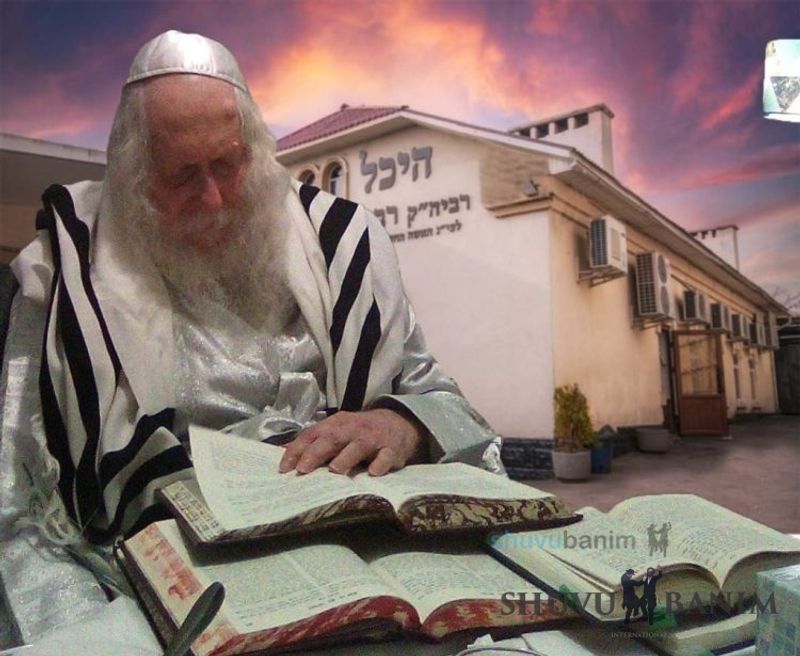 It’s known that Moreinu HaRav shlit”a has tens of thousands of book in his home. Which books does the Rav shlit”a use on his journey?
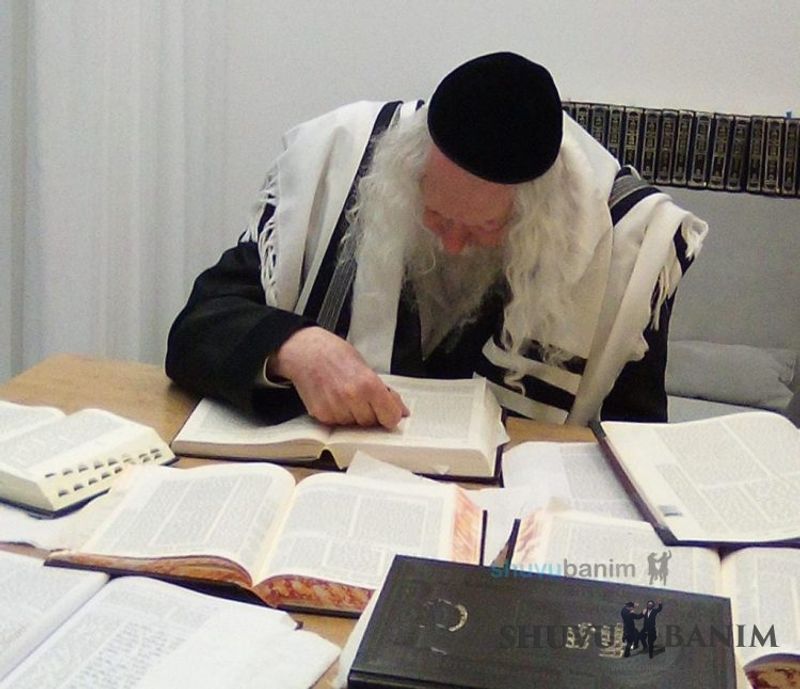
Baruch Hashem, we took a number of suitcases of the Rav’s books, including Shas, Rambam and Zohar. It’s worth noting that the Rav sits and learns the books with phenomenal persistence literally twenty-four hours [a day]! In recent years, the Rav has been involved in the needs of the community, receiving people, and shiurim, [so] the Rav learns less than he would like to. However, here, the Rav is fully immersed in the books with phenomenal concentration, speaking little, and entirely focused on his learning. An interesting point is that the Rav is involved primarily in a book called “Zevach Pesach,” which is a book on the section about the Passover offering in the Rambam. Moreinu HaRav literally is totally involved in this subject; for tens of hours without exaggeration, he has been involved only with this subject. He learns it with the Rambam - Zevachim on Hilchot Pesach and its commentaries. What’s interesting is that we are used to the Rav shlit”a being involved more with learning Choshen Mishpat – Kitzot HaChoshen – and sugiyot of Shas. Here the Rav shlit”a learns Zevachim with the greatest enthusiasm in great depth. This is an interesting and remarkable point in itself.
It’s known that Moreinu HaRav shlit”a has tens of thousands of book in his home. Which books does the Rav shlit”a use on his journey?
Baruch Hashem, we took a number of suitcases of the Rav’s books, including Shas, Rambam and Zohar. It’s worth noting that the Rav sits and learns the books with phenomenal persistence literally twenty-four hours [a day]! In recent years, the Rav has been involved in the needs of the community, receiving people, and shiurim, [so] the Rav learns less than he would like to. However, here, the Rav is fully immersed in the books with phenomenal concentration, speaking little, and entirely focused on his learning. An interesting point is that the Rav is involved primarily in a book called “Zevach Pesach,” which is a book on the section about the Passover offering in the Rambam. Moreinu HaRav literally is totally involved in this subject; for tens of hours without exaggeration, he has been involved only with this subject. He learns it with the Rambam - Zevachim on Hilchot Pesach and its commentaries. What’s interesting is that we are used to the Rav shlit”a being involved more with learning Choshen Mishpat – Kitzot HaChoshen – and sugiyot of Shas. Here the Rav shlit”a learns Zevachim with the greatest enthusiasm in great depth. This is an interesting and remarkable point in itself.
Subscribe to Our Newsletter
Receive Torah articles and inspiration directly in your inbox