The Admor of Toldos Avraham Yitzchak and Rabbi Moshe Brandsdorfer's Message to
Breslov Chassidim on Why the Path to Uman Was Closed
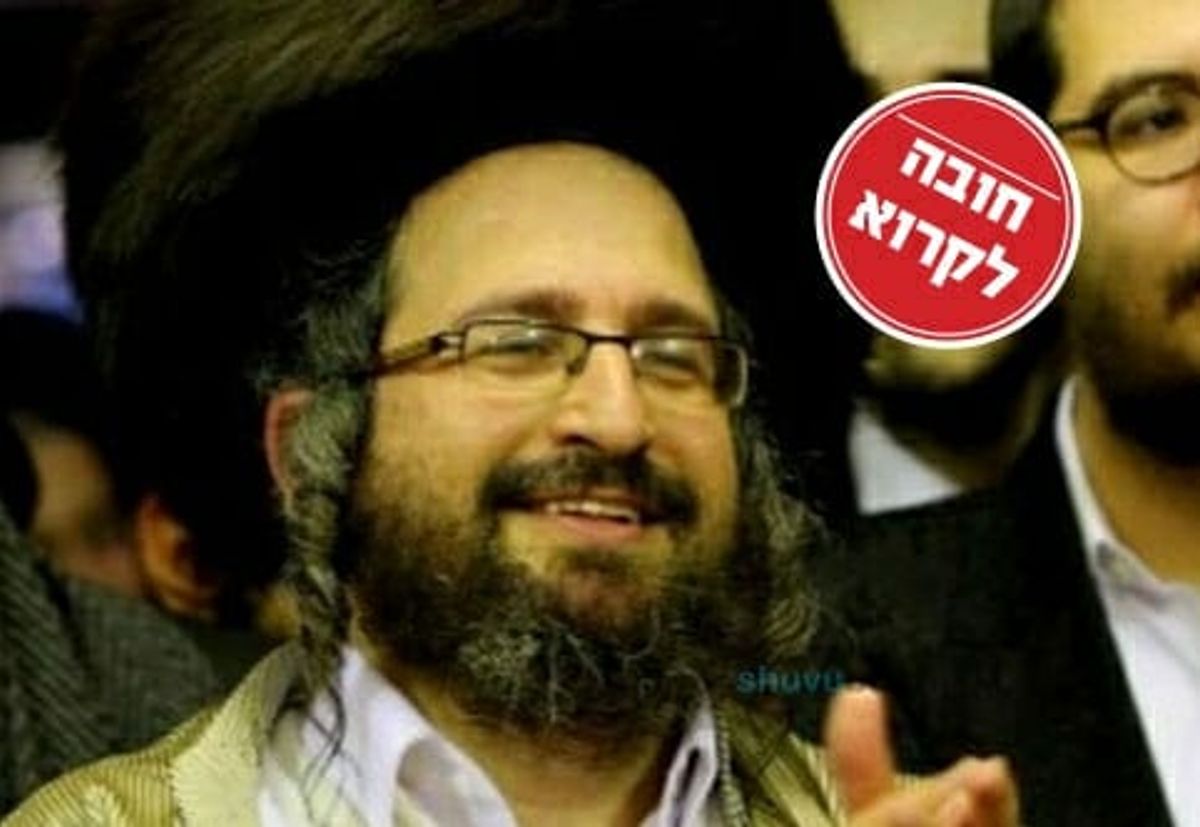
Rabbi Motta Frank shlit"a, one of the great Breslov rabbis, shares a sharp message from the holy Admor of Toldos Avraham Yitzchak shlit"a and from the Gaon Rabbi Moshe Brandesdorfer shlit"a, Head of the Heichal Hora'ah Beis Din, regarding why the coronavirus began in the Holy Land and why the road to Uman was closed. "I have not been in Heaven; I speak from the feelings of my heart. They took an 83-year-old Jew who opened the Tziyun and put him in prison." Rabbi Motta begins his emotional words, which clearly come from a broken heart.
"The obstacles to Uman began two years ago; that is when the problems at the borders started, but people did not grasp that this was a hint from Heaven trying to wake us up. The controversy where they took an 83-year-old Jew, Rav Berland, who opened the Tziyun of our Rebbe, and put him in prison—perhaps that is what caused them to block our entry to Uman."
The full transcript of his holy words:
"The obstacles to traveling to Uman began two years ago; two years ago they started causing problems at the borders. Anyone who arrived at the borders was sent back, but you did not grasp that there is a hint here from Heaven; guys, they are trying to wake you up. They started causing problems at our Rebbe's Tziyun in the middle of the year, and people were afraid of what would happen on Rosh Hashanah and took all sorts of actions."
"Last year, they gave us another year, but the controversies and talk continued—I have not been in Heaven, I am not going to say things clearly, but Breslov is dealing with a difficult reality today; one must take everything into account with introspection. I am not coming as a moralist to anyone; I am coming to speak about myself, what I did not do well during the past year, what thoughts I had."
"You told an 83-year-old Jew to be in prison, to be locked away—so they locked you away too."
"You locked him up, even though he, Rav Berland, is a man who did so much for the Tziyun. The ingratitude of those who now say: 'What do you mean? He never did anything.' There are those who say: 'What do you mean? It is all a lie, he did not do it, who opened it? Other people.' These are Holocaust deniers. On the contrary, he only ruined things, but from Heaven they say: 'What, you do not want to show gratitude? A man did this for so many years!'"
"You have complaints against him, you have problems with him, that is perfectly fine, that is your business, but even in a controversy, there is a way to disagree."
"Rabbi Moshe Brandesdorfer told me, I met him on Friday, 'What is happening to you in Breslov? You are so blind. There was a mess with the coronavirus; they said: It has nothing to do with us, it is a mess happening all over the world. But the coronavirus arrived exactly when you caused Rav Eliezer Berland to go to prison. It has nothing to do with us? Hashem comes and says to you: Now I will show you even closer.'"
"Not only did He take a few souls from you, a few important people, Rabbi Carmel..., He tried to wake you up, do you not grasp it? Fine, I will close Uman to you. Now do you grasp that it is for your sake? He asked me, 'Do they not grasp it?'"
"He told me that he spoke with the Rebbe of Toldos Avraham Yitzchak. He asked the Admor, 'What is happening in the world?' The Rebbe of Toldos Avraham Yitzchak answered: 'The time of the Geulah is awakening, and just as the exile was because of baseless hatred, the Sitra Achra is now stirring up baseless hatred in order to spoil the Geulah.'"
"Rabbi Brandesdorfer asked him if there is more baseless hatred today than in the past?"
"The Admor of Toldos Avraham Yitzchak answered: 'Yes, and I will give you two examples: the story of Rabbi Shteinman and the story of Rav Berland. There was controversy in Klal Yisrael, but there is a way to conduct a controversy. You are allowed to follow your own path and strengthen those who follow your path, but to take the controversy against the other in the harshest language possible and to humiliate him to the lowest level—that does not strengthen your path.'"
"You are humiliating the other; that is baseless hatred, says Rabbi Brandesdorfer. He is a rabbi, he is a posek, but in truth, there is a good hint here from our holy Rebbe. Our Rebbe has lofty matters; he brings the Gemara with Rabbi Eliezer who asked if the sufferings are dear to you. Here is a situation where there are already sufferings, and He says to him: 'If you reveal that they are not dear to you, then I will take them away.'"
"The Rebbe is hinting here: First of all, do not speak any words against anyone. You have already failed; have they already closed Uman to you? You cannot go out now? Accept upon yourself a thought of teshuvah (repentance). Regret it—everyone with their own matters—'Why did I think evil of the other? Why did I speak evil of the other? Why did I do evil deeds to the other?'"
"This matter of injustice... it is one of the greatest injustices that exists. We need baseless love instead of baseless hatred, especially regarding everything that concerns the gathering in Uman."
"The Rebbe calls it a 'kibbutz' (gathering), from the word 'hitkabtzut' (gathering together). It is not an assembly of Anash (our people), it is not friends gathering; it is gathering the outcasts of Israel. To gather with all the outcasts, with all the broken ones, with all the distant ones."
"You wanted to be alone in Uman this year, and you are alone. Everyone with their own minyan, and no one wants to include themselves with the other. If it is for convenience, that is fine, but if there is separation involved, it is the opposite of all the matters of the kibbutz."
"The Rebbe brings in Likutey Moharan the matter of the galbanum. Although everyone can say that in every group there is its own galbanum, that is fine, but let there be no hatred, let there be no separation of hearts, because that is the opposite of all the matters of the tikkun (rectification) of Rosh Hashanah."
"The Rebbe says: 'What do you want from me?' Although I do not know what the Rebbe is speaking about, I speak in the manner the Rebbe speaks; I say what is written in Likutey Moharan. Study Torah 13, the gathering of Rosh Hashanah... all these teachings and more explicitly state that the matter of Rosh Hashanah is inclusion, gathering, unity, love, affection, peace, and friendship. With this, the tzaddik has the power to ascend on high and perform tikkunim."
"But, if G-d forbid you do not want to be included, and on the contrary, you create controversy, you create divisions, the Rebbe asks: 'What do you want? You are not giving me the possibility to engage in the tikkunim of Rosh Hashanah.' Did I ask you to come in order to create controversy here? This is the most serious thing. Therefore, our people said there was a tradition that whoever created controversy in Breslov departed from the world, Rachmana litzlan."
"They saw this in various situations, as R' Levi Yitzchak recounted. Certainly, if they rolled it from Heaven on Tuesday of Parshat Ki Tavo—'Ki Tavo' (when you come) to Uman—that we are already half a month into Elul. Half a month before we need to be in Uman, the matters of Erev Rosh Hashanah and Rosh Hashanah. To contemplate teshuvah and say, 'I do not desire them,' I regret the thoughts, words, and deeds I did... give me the strength not to repeat it."
"Hashem examines the kidneys and the heart, and these thoughts of teshuvah, let us hope they will cause all the roads to be opened, b'ezrat Hashem."
Subscribe to Our Newsletter
Receive Torah articles and inspiration directly in your inbox