
The Noam Elimelech Corrected Two Jews Who Informed on the Tzaddik Rabbi Michel
of Zlotchov
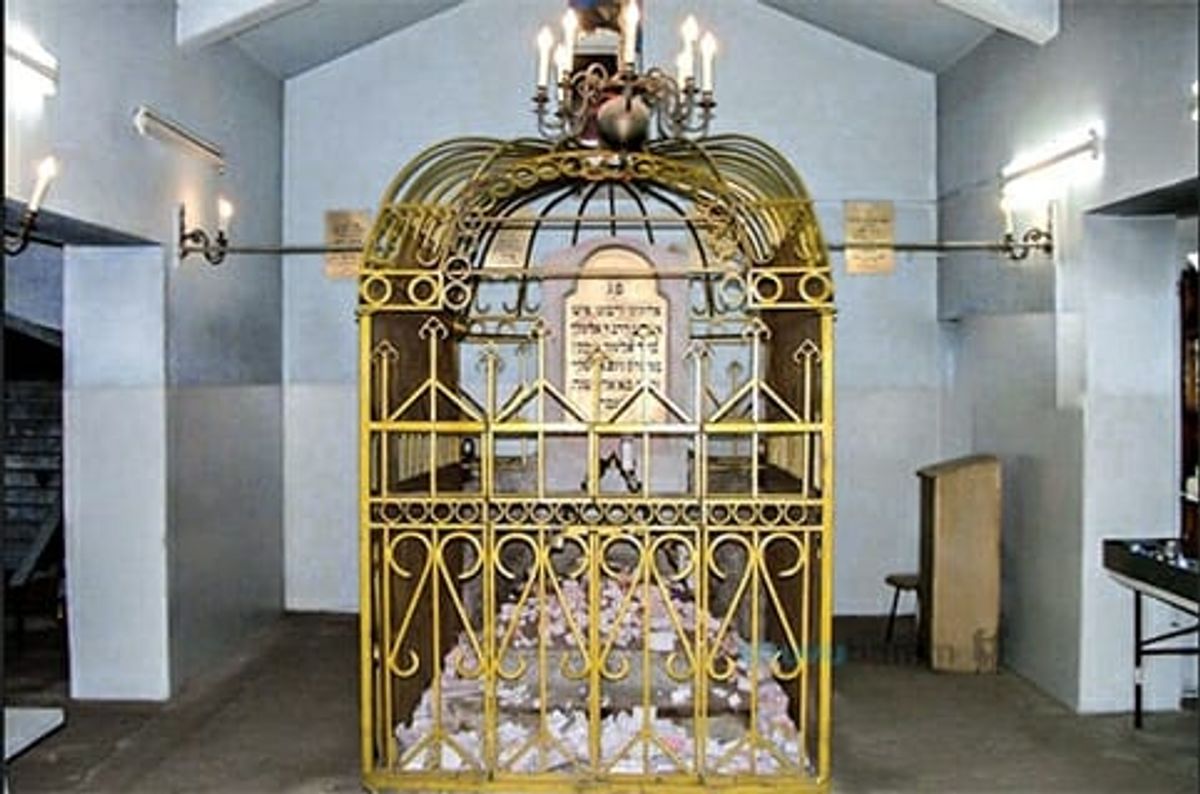
The Yahrtzeit of Rabbi Elimelech of Lizhensk, author of the Noam Elimelech, a Rebbe of the third generation of Chassidut and one of the prominent students of the Maggid of Mezritch, falls on the 21st of Adar.
It is told that once, the tzaddik, the author of the 'Noam Elimelech,' was sitting at a Rosh Chodesh meal together with his holy group, his chassidim and students, when two men arrived and stood at the entrance.
Rabbi Elimelech turned and said: 'Have you ever seen in your lives two men as naked, devoid of any mitzvah-garments, as these? All this is because they dared to slander a man of G-d - Rabbi Michel of Zlotchov.'
Rabbi Elimelech asked the two to recount the deed for which they remained stripped of their mitzvot, so that perhaps a tikkun and atonement could be found for their souls, and this is what they recounted.
'We harassed our accountant until we finally bought his house from him for a third of its true value, but instead of writing in the bill of sale: "All this was done of my own free will, not under duress," the accountant wrote: "All this was done under duress, not of my own free will."
The events greatly distressed the soul of the accountant, and after a short time, he passed away. His sons, who thought they would inherit a large sum, were surprised to hear that a month earlier he had sold us the house for two hundred silver rubles. The sons, who were puzzled by this, turned to the rabbi of the city, the holy Rabbi Michel of Zlotchov.
When we arrived before the Rabbi of Zlotchov, we produced the bill of sale, for we were certain that we would win the case, but since the document was made under duress and a lie has no existence before the tzaddik, the letters flew off the document and it remained a blank piece of paper.
"Did you come to mock me by showing me a blank paper?" asked Rabbi Michel. He immediately took the document, tore it into pieces, and threw it to the ground. With no choice, we returned to our homes, sullen and angry, and decided to keep the matter quiet and, when the time came, to take our revenge.'
Jealousy drove them out of their minds, and they went to denounce Rabbi Michel.
We turned to a great duke who lived near Zlotchov and told him that all the Jews who lease his estates and taverns ask every year to lower the lease fees, all because of Rabbi Michel of Zlotchov. For this Rabbi issued a decree that no Jewish person should encroach upon the boundary of his neighbor, nor set his eyes on the leases of others, even if they were offered to him for half the price, and anyone who disobeys Rabbi Michel is punished by him through his charms and sorcery. Therefore, everyone is afraid and does not dare to lease from the duke a business already in the hands of another Jew. Thus, the lessees demand that the duke lower the lease fees, knowing that their hold will remain in their hands.
The duke was very angry, and after a few days, he gathered all the nobles and dukes for a great banquet. There he told them the reason they were losing much money due to the lowering of lease fees, and the one to blame for everything was the city rabbi, Rabbi Michel of Zlotchov. Therefore, his sentence would be death in three months from today.
On that day, two Jews from Zlotchov happened to be at the duke's house, traveling through the villages with their wares. In the palace kitchen, they offered their goods to the servants and maids, and one of the cooks turned and said to one of the Jews: 'Give me as a gift the pair of earrings I chose, and I will reveal a great secret to you in return.' She then told him about the ministers' decision to kill Rabbi Michel.
The Jew who spoke with the maid could not find rest for his soul, and doubt arose in his heart as to whether there was any truth to her words. In the end, he decided to go to Rabbi Michel and tell him about the evil plots being hatched against him. However, one of the attendants in the Rabbi's house blocked his way. 'I must tell the Rebbe something extremely important,' he said to the attendant. 'Tell me your words, and I will pass them on to the Rebbe.'
The peddler told him the whole plot, but the attendant scolded him and fumed: 'And what does the duke have to do with the Rebbe? He has never met him and never spoken to him; it seems the duke's servants wanted to mock you and frighten you, and therefore they invented these things from their own hearts.'
When the Jew heard the attendant's words, he calmed his fears, left the Rebbe's house, and told the people outside the whole story, thanking Hashem for preventing him from being harmed by the Rebbe's strictness. After three months, two soldiers on horses suddenly arrived in town with their weapons in hand. They stopped in front of Rabbi Michel's house and announced that the duke had sent them to bring Rabbi Michel to him.
Rabbi Michel of Zlotchov was summoned for capture and execution following the denunciation.
Immediately, a great commotion broke out in the whole city, and fear fell upon all the Jews, for they remembered the words of the Jewish peddler and saw that there was truth in his words. Rabbi Michel's associates entered his room; they did not tell him the peddler's words, but informed him that the duke had sent to call him.
Rabbi Michel said: 'Did you not see today that when I approached to pray, I retreated several times and was afraid to approach to pray? It is all because I saw my holy father, Rabbi Yitzchak of Drohobych, standing before me, and I understood that something would surely happen. But do not be sad; just tell the duke's messengers that after prayer, I will come to him.'
Meanwhile, the duke saw that the two soldiers were not returning with the Rebbe and sent many more soldiers, but even they did not dare to enter the Rebbe's house. When the Rebbe finished his prayer, he went out to the soldiers and walked with them to the duke's palace. When they reached the large fence surrounding the palace, the soldiers turned to all the people accompanying the Rebbe in tears and said, 'Only the Rebbe enters the duke's palace, and whoever enters, his blood is on his own head.' At the entrance, there also stood a band of poets and musicians with drums and flutes in their hands, playing loudly so that the nobles would hear the cries and sighs of the Jews.
All the ministers and nobles gathered to witness the sentencing, but because they had a custom that the minister who passed the sentence would not watch the bloodshed, the duke locked himself in the inner room and bolted the door. The Rabbi stepped inside, and suddenly the hands of the musicians were paralyzed, and they remained standing in their places. Even the official in charge of carrying out the sentence was paralyzed with the sword in his hand.
How did you dare to denounce such a holy tzaddik?
Rabbi Michel continued inside until he reached the last room. When the duke saw him, he asked: 'Who are you, and who brought you here?' 'I am a Jew from a seed of people in whom, for 16 generations, no sin has been found, and I do not know why they brought me here.'
The duke understood that this was the Jew brought for execution and wondered how he had escaped. The duke ran outside to see what had happened and saw everyone frozen in their places. He immediately fell on his face before the holy Rebbe and said in tears: 'I have sinned before my master, and from now on I will not add any more to harm him, nor to harm his honor. May the honorable Rabbi pray that the men return to their strength.'
Rabbi Michel replied: 'I will fulfill your request on the condition that all the ministers, together with you, promise and sign not to do any more evil to any Jew living on your estates, nor to dispossess any of them from their lease, and also not to burden the Jews with your yoke.' The duke immediately agreed to his conditions, and in truth, the state of the ministers and musicians returned to normal.
'The duke also wanted to sentence us to death,' said the two Jews who spoke ill of Rabbi Michel before him and caused him all this, but the Rabbi asked that no harm befall them, for 'G-d, the righteous Judge, will fight his battle and perform his judgment.'
Thus the two men spoke before Rabbi Elimelech of Lizhensk, and the Rebbe responded and said: 'Indeed, G-d judged the two sinful Jews and demanded the honor of the tzaddik, Rabbi Michel, and both of them descended and lost all their assets, until they were forced to beg at doors for a loaf of bread and wandered from city to city. Thus they arrived in the end until here - until today there was no tikkun for their souls, but since they confessed their sin today in public and told of their iniquity, their iniquity has departed, and their sin shall be atoned.'
A month later, these two men passed away and went to the world to the World to Come.
Subscribe to Our Newsletter
Receive Torah articles and inspiration directly in your inbox