The Power of Learning Gemara and the Secret of the Soul of Rav Nachman bar Yitzchak
Thursday, Parashas Miketz, the eve of 29 Kislev, the 5th candle of Chanukah 5759 - Hachnasas Sefer Torah (Torah scroll dedication) at the Nechamas Tzion Synagogue
The Yetzer Hara (evil inclination) is willing to let a person do anything, as long as he does not learn Gemara, because only this study purifies the mind. Through the story of Rav Nachman bar Yitzchak, the power of a mother in educating her children is revealed, along with the secret of coping with the breaking of the tablets within the soul by starting anew.
Through the knowledge of opposites—from the fact that the Yetzer Hara spins a person around in a thousand different directions just so he won't learn Gemara—we can understand that there is nothing higher than this study. The Baal Davar (the evil inclination) can spin a person in a thousand directions: a friend calls you, there is a party, you have something important to do. All of this is just so you will run here and there, as long as you don't have time for the Shulchan Aruch, for Yoreh Deah, and for the Gemara. From this exact opposite, from seeing how many detours are created just to prevent you from entering the Kollel (Torah study hall), we learn the truth.
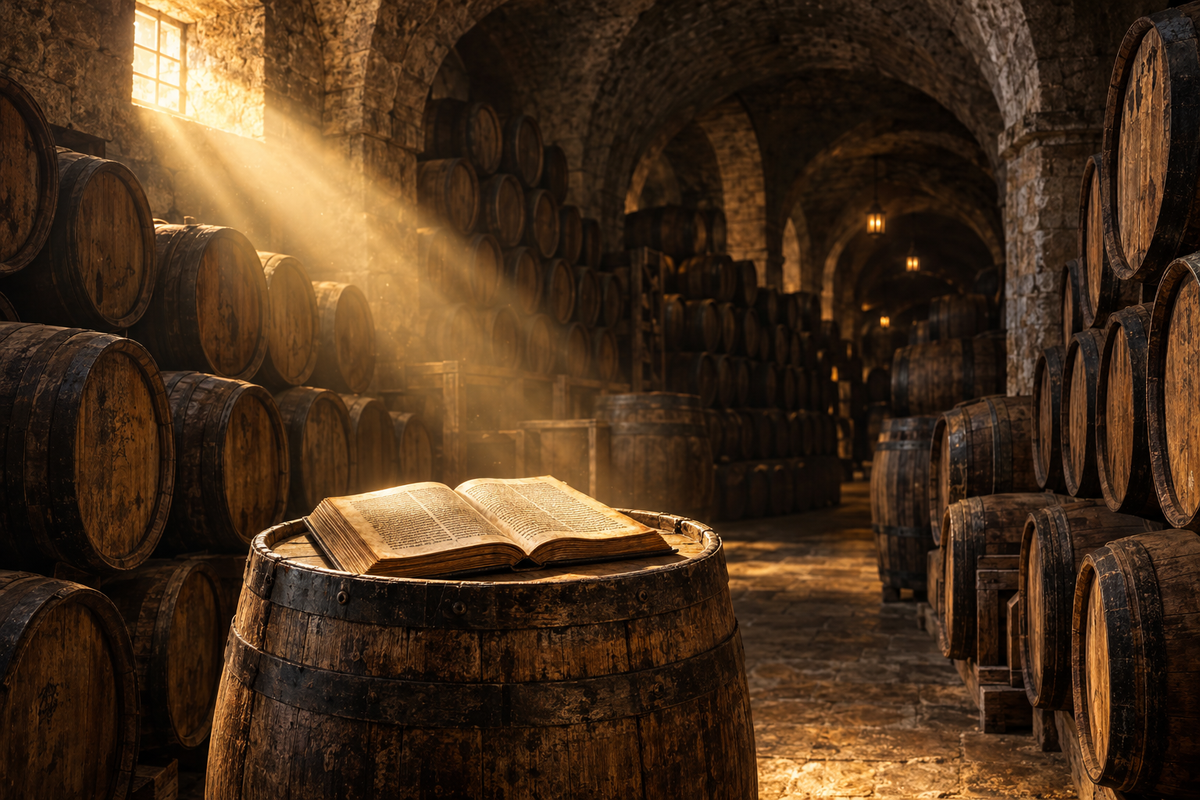
"The Baal Davar will let me do everything in the world," says the Chozeh of Lublin, "just don't learn Gemara." The Alter of Novardok brings a wonderful parable for this: The true thing a person needs to do is completely hidden from him. Even if he has a bookcase full of sefarim (holy books) and sets of Shas (Talmud), it will not help him if he does not open them. What is the Baal Davar compared to? To a man who has a thousand barrels of wine in his cellar, but hidden among them is one barrel of a particularly strong liquor, which is worth more than all the other thousand combined. Whoever drinks a small shot of it immediately becomes intoxicated and loses consciousness. Someone informed on this man to the authorities, and now a policeman on behalf of the king has come to search the cellar.
What does the cellar owner do? He offers the policeman, "Come, I will help you check." He starts tapping on this barrel and that barrel, lifting barrels and assisting him, but in the process, he spins the policeman around and skips over the exact barrel that is the most precious of all. Because he is helping him, the guard trusts him and does not bother to open the difficult barrel himself. This is exactly how the Yetzer Hara operates—he lets you do a thousand other spiritual tasks, just so you will skip over the one task that is worth more than all the thousand combined.
Purifying the Mind by Filling the Intellect
From the fact that the Baal Davar spins me in a thousand directions not to learn Gemara, I understood that there is nothing higher than Gemara. Only the Gemara will bring me to purity of thought; only the Gemara will bring me to holiness of the eyes and holiness of the Bris (covenant). No other spiritual work will bring me to this. Rebbe Nachman says in Torah 8 that we must fill the three mochin (intellectual faculties), and when the three mochin are full, then we can repel all evil thoughts.
Nothing else can repel evil thoughts, only when the mind is filled with Gemara, Torah, Shulchan Aruch, Shach, Taz, Rashi, Tosafos, Rishonim and Acharonim (early and later commentators), Bach, Tur, and Rambam. The Chozeh of Lublin said that the Baal Davar wanted to give him many high spiritual levels—to reach the Fiftieth Gate, to Atik, to Adam Kadmon (lofty Kabbalistic realms)—as long as he wouldn't learn Gemara. But he understood the exact opposite: "I give up all the spiritual levels; I want to be a simple Jew who learns Gemara and Shulchan Aruch." A simple Jew needs to know the entire Shas, all the Rishonim and Acharonim, and the entire Shulchan Aruch with all its commentaries. The primary work is to be a simple Jew who learns Gemara day and night.
The Immense Soul of Rav Nachman bar Yitzchak
The Chozeh of Lublin said that the teachings of Rav Nachman bar Yitzchak are the deepest teachings in the Shas. The soul of the Chozeh would rejoice immensely when learning Shas, and especially when he reached the statements of Rav Nachman bar Yitzchak, which are the beginning and the ultimate purpose of all the teachings in the Gemara, deeper than the sea.
Because Rav Nachman bar Yitzchak was the greatest soul of his generation during the time of the Amoraim, the Baal Davar attached himself to him more than anyone else. Sometimes there is a person whom the Chitzonim (external, impure forces) target specifically because he is the greatest soul of the generation. Therefore, the astrologers told his mother that he would be a thief. As it is written in Shaar Ruach HaKodesh, the greater the soul, the more the Chitzonim attach themselves to it, wanting to nurse from it and drag it down to them. The fact that a child sometimes goes a bit astray or wanders off the path is not proof of anything bad; rather, it is only proof of how great, holy, and pure he truly is.
The Power of a Mother: The Secret of Head Covering and Education
When Rav Nachman's mother heard the prediction of the astrologers, she immediately covered his head. The Rosh says that covering the head is an actual Halacha (Jewish law) and not just a custom, which is why we recite a special blessing every morning upon wearing a hat: "Who crowns Israel with glory." The same applies to the gartel (prayer belt)—we are a holy nation and we do not allow the lower part of the body to dominate the upper part, which houses the brain, the intellect, the eyes, and the ears. We wear a gartel to give strength to the upper part to overcome the dark part that is in the hands of the Chitzonim, and therefore we bless: "Who girds Israel with might." It is an awesome display of might to fight all day long against the body itself and against the many voices of the Sitra Achra (the Other Side) that pull a person in every direction.
The mother is the one who determines the child's education and his destiny. The author of the Toldos Yaakov Yosef explains the verse:
"Hear, my son, the discipline of your father, and do not forsake the teaching of your mother" (Proverbs 1:8).
The Torah is received from the mother. The father is at work or studying and comes home late, so what is the "discipline of your father"? The father's discipline is simply to ask: "Did you listen to your mother?" If the father shows respect to the mother, never yells at her, and answers her with a smile even when she is upset from the overwhelming burden of caring for the children—the child sees this respect, and it gives him the strength to listen to his mother. Rav Nachman's mother was the first in the holiness of Israel to discover that only the kippah and the hat would save the child, and in doing so, she indeed saved the greatest soul of her generation.
Breaking the Tablets and Starting Anew
At the end of Tractate Sotah, the Gemara says: "When Rebbe (Rabbi Yehudah HaNasi) died, humility and fear of sin ceased." Rav Yosef said: "Do not teach that humility has ceased, for I am here." Rabbi Shlomke of Zvhil explained that humility like that of Rabbi Yehudah HaNasi—where the Emperor would bow to him and send him sacks of gold every day, yet Rebbe remained in his humility—such humility indeed ceased. But Rav Yosef said that to be blind and still remain humble is also a high spiritual level.
In that same Mishnah, Rav Nachman says: "Do not teach that fear of sin has ceased, for I am here." Rav Nachman is the treasury of fear of Heaven. And this connects to the conclusion of the Torah, where it is stated:
"And for all the strong hand, and for all the great awesome deeds, which Moshe performed before the eyes of all Israel" (Deuteronomy 34:12).
Rashi explains that "the great awesome deeds" and "before the eyes of all Israel" refers to the breaking of the Tablets. The greatest thing that Moshe Rabbeinu did out of all things was breaking the Tablets. The tzaddik sees broken tablets; he sees people shattered to pieces. A person tries to learn and pray, and everything breaks for him into shattered pieces, and then the tzaddik comes and brings us the second Tablets.
The Torah concludes with the breaking of the Tablets, but we have no reason to despair. If, God forbid, the Torah breaks for us, we immediately start it anew from Bereishis. We buy a new Sefer Torah, we prepare for a new receiving of the Torah. This is the power of the tzaddik – to bring us more Tablets and even more Tablets, so that we will learn the Gemara and the Shulchan Aruch, and through this, we will merit the complete Geulah (Redemption) speedily in our days, Amen.
Part 4 of 4
Subscribe to Our Newsletter
Receive Torah articles and inspiration directly in your inbox