
The Role and Virtue of the Woman of Valor
Parshat Emor by the Esteemed Rabbi Eliezer Berland shlit"a
"Speak and say, to warn the adults regarding the children" (Rashi 21:1) - Parshat Emor by the Gaon and Tzaddik, Rav Eliezer Berland shlit"a
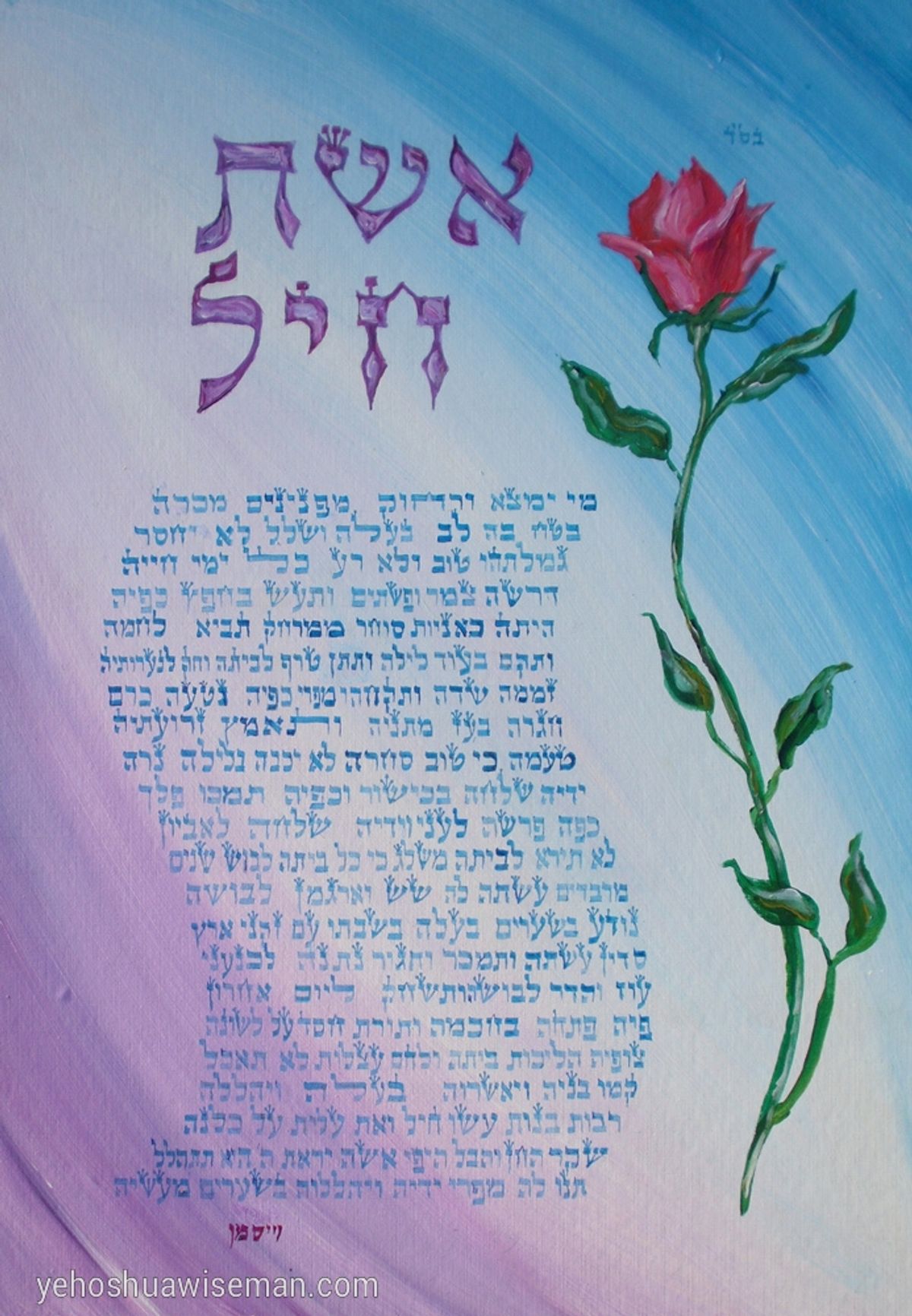
"A woman who fears Hashem, she shall be praised" - The faith of the woman is greater than that of the man
The woman possesses the fear; the woman is more fearful than the man, because the women were not involved in the sin of the Golden Calf, and the women were not involved in the sin of the spies. Because the moment the women received the Ten Commandments, the moment they accepted upon themselves the yoke of Torah and mitzvot, nothing in the world could move them, nothing could divert them—no argument, no persuasion—because the faith of the woman is much stronger than that of the man. This is the nature of the woman; if she has heard a word of Torah, nothing in the world can move her from it.
When they came to the women (to take their earrings for the Golden Calf), every husband tried to convince his wife: "What? Do you not believe in Aaron the Kohen? Do you not have faith in the tzaddikim? Aaron the Kohen said to make a calf!" And the women replied: "What do you mean he said to make a calf? What is this, is Aaron changing the Ten Commandments?" The holy Zohar says, "And they broke off (vayitparku) from the people" – what is the meaning of the term 'vayitparku'? The Zohar explains that the women did not remove their earrings under any circumstances! They grabbed their ears and pressed their hands against them. So it is written "vayitparku," like "one who breaks mountains and shatters rocks"; they simply took it by force. "They grabbed and broke their ears," as the Zohar says – because when the husbands fell into some madness, Heaven forbid, and wanted to make a calf, then Hashem have mercy, but the women remained in their innocence, in their purity, in their modesty, and in their pristine faith, and nothing moved them, nothing in the world!
The Palaces of the Righteous Women
The holy Zohar says that there are palaces in Heaven, palaces that the righteous women merit. There is a palace called Bitya the daughter of Pharaoh, where thousands of women innovate new Torah insights every day. There are thousands of women there who left their homes, left their wealth, and left their careers. Bitya was a princess and left everything to be a simple Jewish woman. So, any woman who could have been a great executive but left everything to be at home, to raise children for Torah study, sends her husband to study Torah, recites Psalms, and goes to the Western Wall—she ascends to such levels that no other woman can reach, and then she merits the levels of Bitya the daughter of Pharaoh, who ascended to the Garden of Eden with her body.
Women are in the category of an altar, for in truth they sacrifice themselves to Hashem
Women sacrifice themselves; they receive the children and care for ten children. The mothers do everything; they dedicate themselves to the children, feeding them, giving them to drink, bathing them, doing it with self-sacrifice, sacrificing themselves to Hashem, and thus they can be prophetesses. Like Deborah the Prophetess, like Miriam the Prophetess.
What is a home? A home is a Mishkan (Tabernacle); Mishkan is an acronym for bed (mitah), table (shulchan), chair (kise), and lamp (nerah). The woman cleans the house, educates the children; in the house there are Torah scrolls because the children study Torah. The husband can sit and study Torah, and when the woman washes dishes, lights candles, cooks, and sets the table, she is building the Mishkan. If she does her work, her mission, she can receive prophecy from this.
A woman is indeed exempt from studying Gemara, but she is not exempt from being attached to Hashem; from that, she is not exempt. She can be attached to Hashem while she cleans the house, cooks, and washes dishes. As it is told about the wife of Rabbi Yitzchak of Drohobych, the mother of Rabbi Michel of Zlotchov, that in the middle of sweeping the house, she said "Kadosh, Kadosh, Kadosh" (Holy, Holy, Holy). Her husband, R' Yitzchak, asked her, "Why are you saying Kadosh, Kadosh, Kadosh?" She answered and told him, "I hear the song of the angels; the angels are saying Kedushah now."
Rabbi Moshe Leib of Sassov became blind. They asked him, "Why did you become blind?" He told them, "Because of my wife I became blind..." Everything she says is "In honor of Shabbat, in honor of Shabbat." She kneads the dough and cooks, and says, "In honor of Shabbat," and from every "In honor of Shabbat" that she says, an angel is created. From every word in honor of Shabbat, angels are created, until the whole house becomes a burning fire; the whole house was filled with angels until they blinded my eyes from the intensity of the light. If a woman does what is necessary in her matters, performs her role with faithfulness, with joy, with awe and love, for the sake of Hashem, then from the simplest things she can receive prophecy.
Subscribe to Our Newsletter
Receive Torah articles and inspiration directly in your inbox