The Secret of the Seven Days of Celebration: The Groom, Yom Kippur, and the Infinite Light
Class No. 261 | Cassette 261 (requires further editing) Sunday morning, Parashas Shoftim, 26 Menachem Av 5760 - at the yeshiva Monday night, Parashas Shoftim, eve of 27 Menachem Av 5760 - Sheva Brachos (seven wedding blessings) at the home of the Rav shlit"a
During the days of Sheva Brachos, the groom and bride are in a state of tremendous spiritual ascent, akin to Yom Kippur and the Holy of Holies. Anyone who participates in their joy and nullifies himself to the Infinite Light shining within them merits that his own soul will also be completed and his sins will be forgiven.
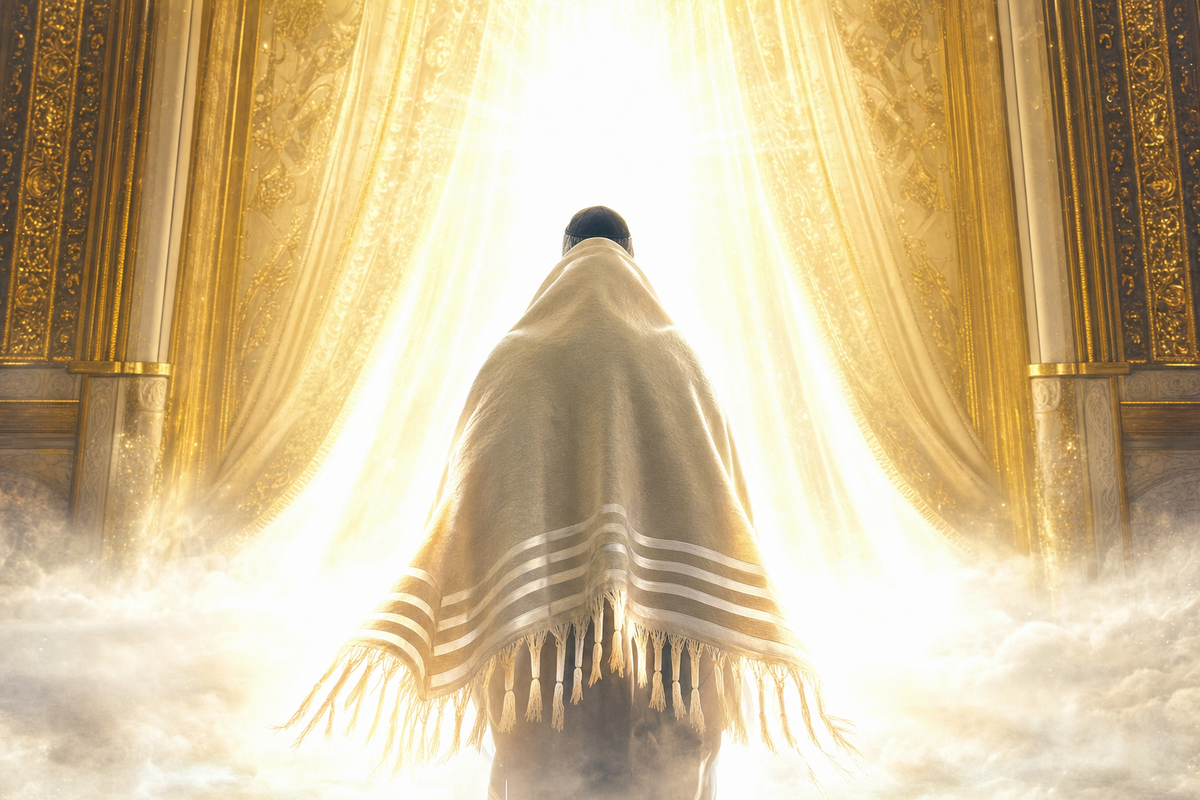
Even if people do not always understand what this joy accomplishes, one must know that now, during the chuppah (wedding canopy) and the seven days of celebration, it is exactly like the Giving of the Torah and the eve of Yom Kippur. The groom and bride are in a state of unceasing spiritual ascent. They ascend from the Sefirah of Binah (Understanding) to Kesser (Crown), to the Kesser of Atik (the Ancient One), and to the Kesser of Adam Kadmon (Primordial Man). Throughout the seven days, they are in constant ascent, until they reach the level of the "Seventh Beggar" (from the tale by Rebbe Nachman of Breslov), who is completely without legs. The meaning is that they no longer have legs touching the ground; they do not touch this physical world at all. There is no world, no physicality, nothing but tremendous spirituality.
The Power of the Groom to Uplift the Congregation
The sefer "Degel Machaneh Ephraim" explains regarding the blessing, "Bring great joy to these loving friends, just as You gladdened Your creation in the Garden of Eden from of old," that the groom uplifts everyone together with him, and this is the reason we do not say Tachanun (prayers of supplication and confession).
Sometimes a person might think: "What do I have to do with this groom? I wanted to sit and learn right now, or go to sleep. Suddenly they come, make a seudah (festive meal), invade my privacy, and take over my living room. What do I need this trouble for?" Logically, when the groom is still standing outside, perhaps we should have said Tachanun. But the truth is that this groom is the aspect of the Holy Temple, he is the aspect of Yom Kippur—and right now, everyone's sins are being forgiven.
When one ascends to the level of "Atik," there is no longer a room, there is no house, there is nothing—one sees everything illuminated. In such a state, every physical desire is nullified. There is no desire to sleep, there is no eating, it is impossible to do anything physical, because one ascends to a very great light, to the Infinite Light. A groom is literally the Infinite Light. Whatever a person thinks about during these seven days, based on that, he will be judged for his entire life. Every day and every night corresponds to seventy years. In previous generations, three hundred years ago, they would not sleep at all during the nights of the seven days of celebration. They would celebrate exactly like the Simchas Beis HaShoeivah (the Water Drawing Celebration in the Temple), out of the understanding that this joy is what will bring about the rebuilding of the Holy Temple.
A Joy That Overrides Yom Kippur
We find that King Solomon postponed the fast of Yom Kippur during the inauguration of the Holy Temple, because when the joy arrived, it was greater than Yom Kippur. The groom himself is the aspect of the Holy Temple, the aspect of the two Cherubim. There is no physicality or materialism in him. The groom and bride are now in the upper worlds, in the Infinite, in the Garden of Eden before the sin of Adam HaRishon (the First Man). The "Imrei Emes" of Gur brings down that during these days, the Hidden Light of the seven days of Creation shines brightly. Therefore, how is it even relevant to sleep when this light is shining?
The Completion of the Soul for All Participants
A groom uplifts everyone. When we arrive to bring joy to a groom, it means that we are revealing the tikkun (rectification) of the world. Why does a groom have no sins? Because the moment he gets married, his body is completed and his soul is completed. And when the soul of the groom is completed, and when we truly participate in his joy—then our souls are completed as well. Everything is completed now: the body is completed and the soul is completed. Therefore, there is no need to say Tachanun and there is no need for anything else, but only to be included in this tremendous joy that rectifies everything.
Part 3 of 4 — Class No. 261
Subscribe to Our Newsletter
Receive Torah articles and inspiration directly in your inbox