
The Treasure Hidden Within You
Parshat Chayei Sarah by the Gaon and Tzaddik Rabbi Eliezer Berland shlit"a
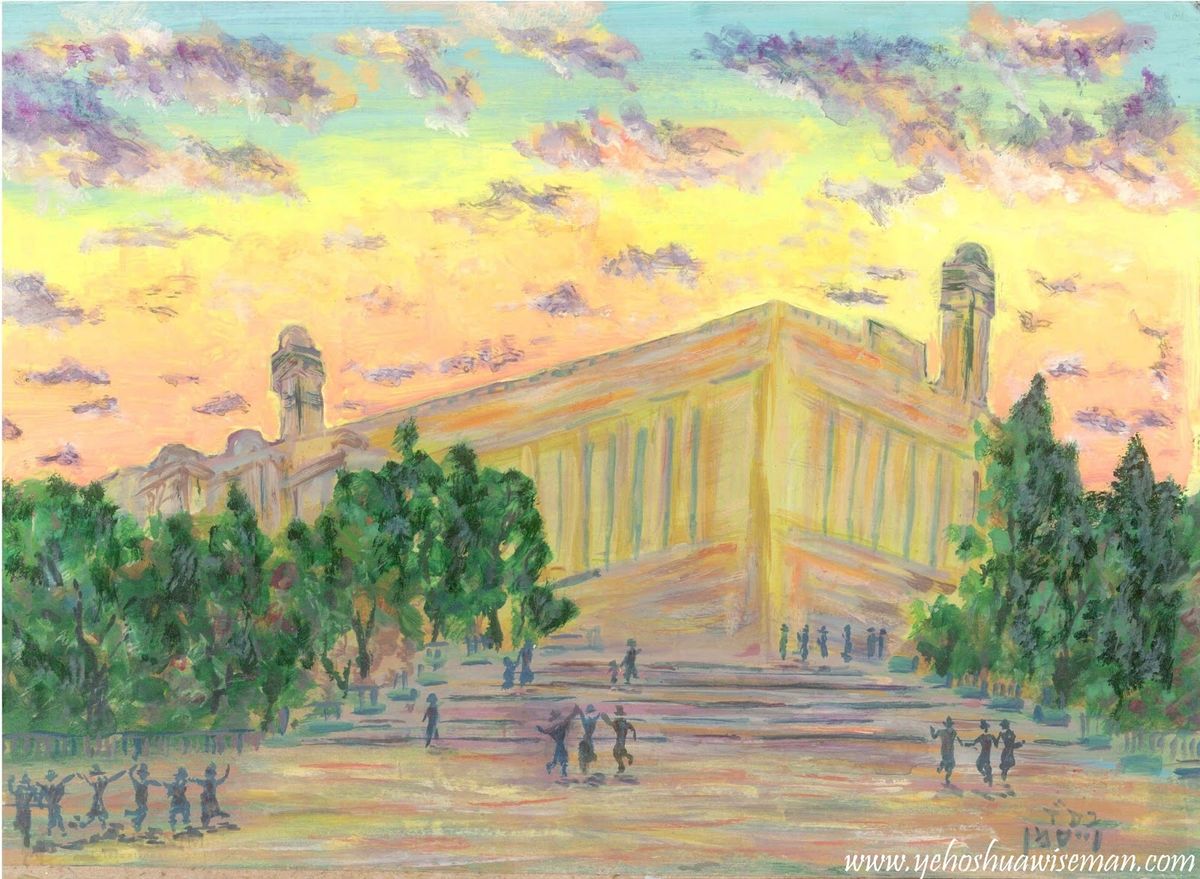
Parshat Chayei Sarah by the Holy Gaon and Tzaddik Rabbi Eliezer Berland shlit"a - The Treasure Hidden Within You
"Ephron possessed a vast treasure in his courtyard (the Cave of Machpelah). He had Adam and Eve there, who illuminated from one end of the world to the other. Yet, for him, the Cave of Machpelah was darkness and gloom, absolute darkness. Since Adam and Eve were buried in the cave, Hashem arranged for there to be terrible fears, such delusions that demons and spirits were present there. It was terribly frightening to approach the place; it was a forsaken spot on the side of the mountain. No one wanted to buy this place until Ephron was certain he was deceiving Abraham Avinu in the sale of the cave."
"Reb Noson explains that regarding the holiest place, or the holiest Tzaddik—wherever there is great holiness—it always appears as a place of darkness and gloom, surrounded by demons and spirits. As it is written: 'Whoever is more holy than his fellow is more desolate than his fellow.' Ephron in Gematria equals 400, which is the same as Ra Ayin (Evil Eye, 400)—the opposite of a good eye. Therefore, he saw only darkness and gloom in the Cave of Machpelah. However, King David possessed a good eye, as it is beautifully written, 'Beautiful of eyes and good of appearance.' He saw only the light in every Jew, the good point in every Jew, the holy spark within every Jew. A person sees their own light but does not see the light of the other, whether among friends or in the home."
"Sometimes a man sees light in his wife, while the wife does not see light in her husband, or conversely, the wife sees light in her husband but he does not see light in his wife. In truth, each one must see the light in the other, for it is forbidden for a person to see a deficiency or a blemish in another. The essence of the 'evil eye' is that one cannot bear that his friend is better than him; his eye looks narrowly at his friend's elevation. He sees that his friend learns more, prays more. Why should it bother you that he prays better? That he learns better?"
"Every person possesses an evil eye, and no person is willing for another to be greater than them. If a person were willing for another to be greater than them, they could live forever; they could rectify the entire world. But a 'good eye' is something else entirely—it means you are happy for the other, you love the other, you rejoice in their elevation. This is the aspect of the true Tzaddik, who is entirely a good eye. This is King David, who is 'beautiful of eyes and good of appearance,' who is entirely a good eye, and his eye is not narrow toward anyone. Within every person, there are treasures; one only needs to remove the dust that covers them, one needs to exit the shell of Ephron, of the evil eye."
"In every son and every daughter, in every Jewish soul, there are endless treasures. The Jewish soul burns for Hashem and blazes for Hashem. Every soul of a Jew wants to do teshuvah (repentance)! Every Jew has a heart burning for Hashem Yisbarach, a burning heart that can set the whole world on fire. Every Jew is a flame of fire; in the innermost depth of every Jew, a fire burns: 'A perpetual fire shall be kept burning on the altar, it shall not go out.' Every single Jew can bring the entire world back in teshuvah. Even the greatest evildoer can return in teshuvah, because the greater the evildoer, the more strength they have, the greater the soul they possess."
"This is like the story told in the Midrash about Yosef Meshita, who denied Hashem, denied everything, and joined the Romans. Whoever kept Shabbat or circumcised children at that time was crucified. He saw that the Nation of Israel was lost, being wiped off the face of the earth. He fell into despair and said, 'Why do I need to be a Jew? I will be a Roman.' He went with them to burn the Beis HaMikdash (The Holy Temple), throwing torches with them. Before the Beis HaMikdash was completely burned, the Romans said to him, 'Wait one moment! Who will enter the Sanctuary to bring out the Menorah?' They told him, 'You enter and take something.' Everyone knew that whoever enters the Sanctuary gets burned; whoever enters the Holy of Holies will be burned. Everyone was afraid to enter, so they told him, 'Whatever you bring out first shall be yours.'"
Yosef Meshita entered, grabbed a golden Menorah there, and came out with it. They told him, 'Give us that Menorah! You cannot take that; it is too expensive! Take yourself a goblet, a spoon, but not a Menorah!' At that moment, the Jewish spark ignited within him. Suddenly, the spark lit up; the Menorah kindled his spark. He saw that the Menorah was entirely light. Then he held the Menorah tight and said, 'You are not getting the Menorah; you will not receive the Menorah.' They said to him, 'What do you mean we won't receive the Menorah? We will slaughter you, we will beat you.' He told them, 'I am not giving the Menorah. You will not take the Menorah from my hand. I will die with the Menorah.' They told him, 'It doesn't belong to you! It belongs to the King! We need to bring the Menorah to Titus.'"
"He said to them, 'You will not receive the Menorah under any circumstances; I will die together with it.' Then he became entirely a flame of fire, entirely a fire burning for Hashem. 'I am returning to Judaism! I am starting to be a Jew! Cut me into pieces.' They said, 'Fine.' They grabbed him, put him on a carpenter's table used for sawing wood, and began to cut him; they sawed him into pieces. The moment he began to suffer, he felt such delight; with every sawing motion, he delighted. He was entirely seized with joy, entirely with enthusiasm, saying, 'I accept teshuvah upon myself. I accept the tortures upon myself with love. Master of the World, it is good that they are sawing me, it is good that they are cutting me. Forgive me for all the sins—how I joined the Romans who murdered millions of Jews, how I did not know that the Nation of Israel is eternal!'"
"'A Jew is eternal. Bless Hashem that they are sawing these rotten bones, these poisoned bones that caused me to sin and dragged me to where they dragged me.' And Yosef Meshita was entirely singing to Hashem, entirely happy. While they were sawing him, he continued to sing; he felt no pain. He sang songs, singing 'Nafshi Cholat Ahavatecha' (My soul is sick with Your love). They were sawing him, yet he was lovesick for Hashem; he felt only Hashem. He felt nothing except Hashem."
From the leaflet Tzam'ah Nafshi
Subscribe to Our Newsletter
Receive Torah articles and inspiration directly in your inbox