
Why Did Rav Berland Sign a Deal Despite Being Completely Innocent?
Attorney Amit Hadad with All the Answers
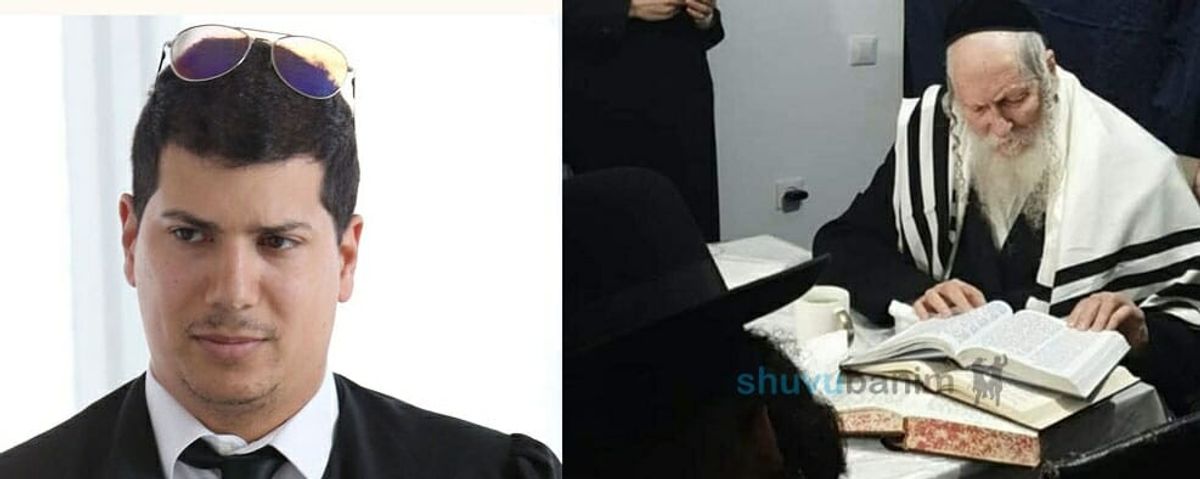
After a long and exhausting saga in which our teacher, the holy Rav Eliezer Berland shlit"a, contended with an aggressive system that spared no means to afflict him, it seems that the period is approaching its end, with Hashem’s help.
Attorney Amit Hadad answers all the questions regarding the plea deal that our teacher, Rav Berland shlit"a, was forced to sign, in light of his difficult health condition which prevents him from managing the case and proving his full innocence.
“The question that many are asking: Why does Rav Berland need to admit, time after time, to things that are not even an offense? Why does he need to reach a deal at all and cannot prove his innocence, that he did nothing?”
The interviewer from the Breslov line (*9148) opens with a question that is painful and burning to the tens of thousands who watch from the sidelines the scandalous legal proceedings against our teacher, the holy Rav Eliezer Berland shlit"a.
“To our great sorrow, we are familiar with Rav Berland’s condition. I think there is no one who does not know how ill the Rav is and how his strength cannot sustain him, and in this context, we were required to balance the various considerations. I think we reached an arrangement that, from the Rav’s perspective, is excellent, but we are doing this with great pain. We truly thought, and still think, that to manage this case—if Rav Berland were in his youth—we could have achieved significant results. Nevertheless, this arrangement is good and correct. I think that even the State, at the end of the day, showed responsibility regarding the Rav’s condition, and I hope that very soon we will be behind this affair.”
“If we had continued to the finish line, would the Rav have been acquitted despite all the smears in the media and press against the Rav?”
“The Rav admitted to the indictment, and we certainly are not retracting this admission, but as a defense attorney, I think there is much for a defense attorney to do in this case. I think that if the matters had reached the court, we could have done a great deal, and I am very optimistic regarding the result if we had managed the case.”
“I think that in terms of the case, we have beautiful arguments. I think the matters would have collapsed into themselves, but one must remember that we are managing considerations beyond the management of the case in court. There is a consideration here of what is right for the Rav, but we reached a decision that we are arriving at an arrangement. Again, I think that even the other side finds it hard to swallow this arrangement from their perspective. This mutual bitterness suggests that we probably did something very good.”
“What is the discussed deal?”
“The Rav sat in detention for a period of about 13 months; this time is, of course, counted for him. The sentence that will be imposed on the Rav is 18 months, deducting the 13 he has already served. He is to serve his sentence at the beginning of October; during this time, he will continue to stay under house arrest. He can see family members more, talk more, and will certainly be able to be in more contact with his immediate surroundings.”
“We hope that we will be able to argue later that the Rav is also entitled to a third [reduction], etc. With that, the matter will end, and we will be able to part from a dismal affair that we have spoken about all the time.”
“We believed all along that the attempt to take a religious practice and turn it into a criminal offense is a bad and incorrect attempt. I think that even the other side thinks it was not a successful attempt from their perspective.”
“In the past, a 14-month deal was offered that fell through?”
“The Attorney General, to our great sorrow, decided that the previous deal was not correct. In many respects, we signed the same deal; on the substantive level, we are in the same place, at least in our opinion. Therefore, it is a pity that there was intervention then, but we respect the decision. This deal has already passed his approval.”
“What is the next step?”
“There was a signing and presentation of the arrangement. Next week, on Sunday, we will hold arguments for sentencing, and we will argue jointly that the plea agreement should be adopted in terms of the sentence, and we will receive a verdict.”
“Attorney Amit Hadad, this is the place to thank you for the entire period you acted on the case. Many in the community would like to thank you personally... we thank you on their behalf.”
“We saw your broad heart, that you did it with all your heart, you connected to the Rav... thank you.”
Amit Hadad: “I must admit that the Rav is truly a special figure and the case against him is so unjust. And to assist as much as possible is truly a great merit, with Hashem’s help.”
Interviewer: “I want to tell the listeners how they presented the Rav to you when you arrived to represent him, and what you saw afterward—it is a completely upside-down world.”
Amit Hadad: “To my sorrow, there are quite a few people who took it upon themselves as a mission to try and cause harm... it is not my place to judge them, but I think it is time for everyone to calm down.”
Interviewer: “We are all hopeful that the Rav will end this saga and live to 120 years with contentment and happiness without new harassments.”
Amit Hadad: “Amen.”
“Amit Hadad, thank you very much.”
Subscribe to Our Newsletter
Receive Torah articles and inspiration directly in your inbox