
“You Brought Us This Far—Bring Us to Uman” • First Article in the Series
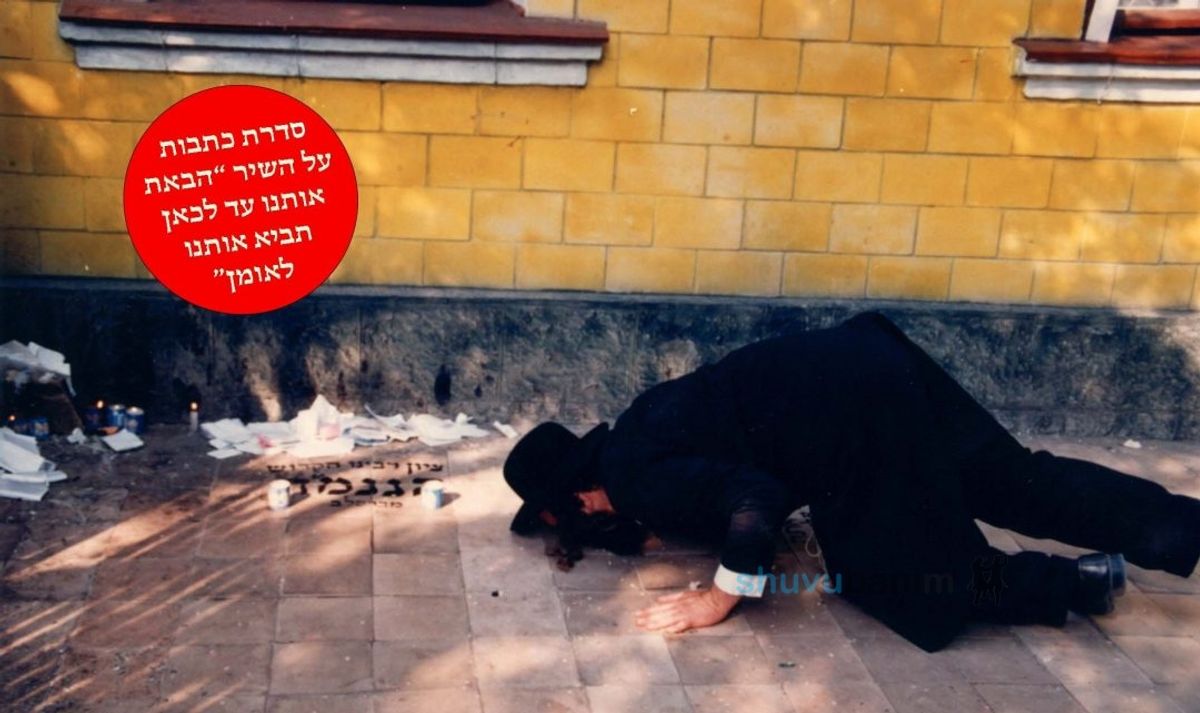
On the song “You brought us this far” • About the verses of the song; how and when it was written, • and what stands behind each verse of this song of longing?
Hearts are beating with bated anticipation. Is it really true? Will we actually merit to arrive, or will it turn out that once again, we have reached a dead end, where the only way is to return home just as we came, without having achieved the desired goal...
After investing the essence of their strength and their lifeblood, after laboring so much to obtain the sum of money that allows for the high costs of flights, and after obtaining—with superhuman efforts, following repeated delays—the coveted visa to the 'Garden of Eden' called the Soviet Union, while the officials look at them with astonishment, not to say pity, and twirl their fingers at their temples to clarify exactly what they think of the group of delusional people standing before them, who are making every effort to enter a country that everyone who can is trying to leave. There stand the Breslov Chassidim somewhere in one of the airports scattered throughout Europe, and in the face of the new obstacle that has suddenly arisen, they ask themselves: 'Will this ever end? Will we actually reach Uman'??
Thus were born the stirring words of the song/supplication "You brought us this far, bring us to Uman." 'Father in Heaven, after so many difficulties and hardships that hindered us, after so many obstacles that piled up in our path, after so many disappointments that were our lot, and yet "You brought us this far." Our request—after so many miracles we have seen—please, "bring us to Uman"...
"Oh that I had wings like a dove! I would fly away and be at rest"
The song of longing for Uman, which our teacher Rav Berland shlit"a composed during those years filled with anticipation and yearning for the opening of the path to the gravesite of the great healer of souls, Rebbe Nachman of Breslov in Uman, who promised great and hidden things to whoever would merit to come to his holy gravesite, is well known to many of our Anash (people of our community). However, while most of the public knows the song only from the occasions where it is sung, there are also those who know the stages of the song, and the times when many of the rhymes were actually fulfilled.
In the upcoming series of articles, we will try, with the help of Hashem, to focus on a number of verses that will give us a look at the importance of the journey and its holiness, as well as the plans of our teacher Rav Berland shlit"a in connection to the gravesite of our holy Rebbe, some of which are expressed between the verses of the song, and of course, even these are only a small taste.
First article in the series:
"Without eating or drinking, only prayer and immersion"
The conduct of Rav Berland while traveling to the gravesite of our holy Rebbe in Uman was that he would fast on that day. One must prepare for the Rebbe, and for the Rav shlit"a, for whom eating does not take up space anyway, it is natural that the Rav would not eat. Only this must be known, that many times the journey, including the return trip, lasted an entire day in which the Rav did not eat a thing, and thus it was fulfilled literally: 'without eating or drinking'.
On other occasions, when they would arrive at the Rebbe's gravesite at night, they would immediately plan for the next night... so that another day passed in which no food reached the mouth of our teacher Rav Berland.
In general, the Rav would take almost no food with him on the journey. The honorable Rabbi Yehoshua Dov Rubinstein, who followed our teacher the Rav shlit"a on the many trips to Uman, recounts that he once decided to check the suitcase of the Rav shlit"a. He was not surprised to discover that apart from books and clothes, the suitcase contained no food, except for a package of dates...
However, the Rav did not only conduct himself this way, but even recommended that Anash traveling should do the same. The honorable Rabbi Yosef Marian tells 'Hitchadshut' that the Rav also instructed Anash that whoever could should try to fast when they needed to cross borders, because they needed open miracles for the trips, and thus many of Anash would fast until they crossed the borders.
On the other hand, in prayers and immersions, Anash did not hold back at all... whether it was long prayers, as with our teacher the Rav shlit"a, there is no concept of shortening the prayer because one is on the road or in some remote airport that it is doubtful they ever saw a Jew, let alone a praying Jew. But the Rav shlit"a stands and prays for long hours with melodies, or alternatively with shouts. The common denominator is that the Rav shlit"a prays as if he were in his own home.
We heard a wondrous story from the honorable Rabbi Nachman Horowitz, that on one of the trips to Uman, the time for boarding the plane coincided with sunrise. Our teacher the Rav shlit"a reached the Amidah prayer in the bus transporting the passengers from the terminal to the plane, and immediately began the Shemoneh Esrei prayer. An eyewitness who was present at the scene and who told the story to R' Nachman describes that he looked at the Rav with great astonishment. Standing for Shemoneh Esrei on a bus whose entire ride is a minute or two? However, his astonishment did not last more than a few moments; suddenly the bus stopped and they announced to the passengers that due to a malfunction in the plane, it was impossible to board the plane now, and they must wait on the bus until further notice... An hour later, our teacher the Rav shlit"a stepped backward, "Oseh Shalom," and as if by coordination, they announced that the malfunction had been fixed and it was possible to board the plane.
And it is impossible, of course, not to focus a little on the prayers until they reached the stage of the flight. For long hours, night after night, the Breslov Chassidim would engage in hitbodedut (seclusion) and pouring out longings and supplications before Hashem in order to merit to overcome all the obstacles that seemed insurmountable. For indeed, by the way of nature, there was no chance, not even the slightest, to reach the gravesite of our Rebbe in Uman. Before their eyes stood only the words of the Rebbe, that prayer changes nature, and thus, and only thus, did they succeed in reaching Uman.
And immersions... Oh! How much self-sacrifice is included in this word. What tremendous self-sacrifice Anash, led by our teacher Rav Berland shlit"a, made to achieve immersion in every place where there was any chance. Especially on their way to the gravesite of our Rebbe, for at his gravesite, Breslov Chassidim have always been very careful not to enter without immersion in a mikvah.
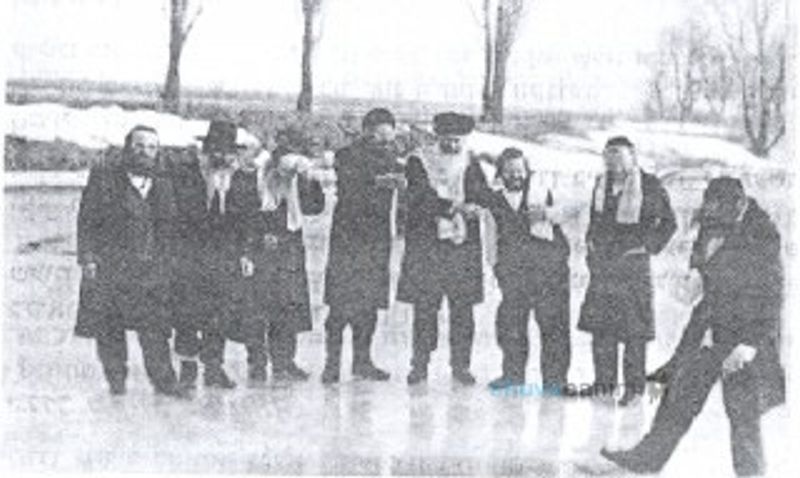
Various frozen rivers did not deter our teacher the Rav shlit"a in the slightest, who more than once broke the ice with great effort until a hole was created where one could immerse in cold that cannot be described. Old and foul-smelling mikvaot also did not constitute an obstacle to meriting purity. The stories of self-sacrifice in this are amazing, and over time the Rav was already like a guide as to where there was a mikvah in the city of Vinnitsa and where there was a river in Kiev or Odessa.
The honorable Rabbi Natan b"r Mendel Shapira tells of one of those trips where he went with the honorable R' Amram Horowitz z"l in the middle of the night to immerse. On their way near the river, they met our teacher the Rav shlit"a, who knew the river well, and instructed them that the place where they were was a sewage area, and they must move to another area where it was possible to immerse properly.
The honorable R' Rachamim ben Yosef tells that when they would go to immerse in the rivers, the cold was so great that the people would almost freeze and could not move, and they needed other people to warm them and help them get dressed. However, our teacher the Rav shlit"a would jump into the river for immersion and come up as if nothing had happened.
Over time, Rav Berland had already developed an understanding of which place in the river the ice was less hard and could be broken more easily...
On trips where a representative of 'Intourist'—the USSR tourism office, which was actually a surveillance branch of the KGB following the tourists—was attached to the group of travelers, Rav Berland would explain to him at the beginning of the trip that we needed such and such a day to go to some river or the like in order to bathe. Sometimes it even helped...
A rare photo of the Gaon and Tzaddik Rabbi Eliezer Berland shlit"a breaking a frozen river with his foot in order to immerse at the holy gravesite before Rosh Hashanah:
Subscribe to Our Newsletter
Receive Torah articles and inspiration directly in your inbox