
Rabbi Michael Gol shlit"a Reveals Secrets of His Path of Drawing Close to the
Holy Tzaddik Rabbi Eliezer Berland shlit"a
Thursday, Parshat Pekudei 5782
Secrets from the Inner Chamber of the First Personal Assistant to our Teacher, the Holy Gaon and Tzaddik, Rav Eliezer Berland shlit"a
The Rosh Yeshiva of 'Maginei Eretz', Rabbi Michael Gol shlit"a, drew near to our teacher Rav Berland shlit"a over forty years ago, and merited to be the personal assistant and confidant of Rav Berland, where he was exposed to the awe-inspiring greatness of Rav Berland. For years, he treasured countless stories; now, in light of the relentless persecution, he is stepping out of his reserve to share what his eyes have seen.
These are his holy words:
Rav Berland’s Perspective on Breslov Chassidut and the Study of Gemara
"I drew near at the beginning of the year 5740," Rabbi Gol begins. "It was at the beginning of the month of Cheshvan. I came from a Religious Zionist home and grew up with the understanding that the Gemara is the center. When I began to draw near, I heard all sorts of voices saying that there is no need to study Gemara, that one should only invest in studying Halacha, because Halacha clearly distinguishes good from evil, etc. And furthermore, that one should not engage in 'Likutey Moharan' and 'Likutey Halachot,' but only in 'Sippurei Ma'asiyot' (Tales of the Tzaddikim). Such rumors circulated among various Breslov Chassidim.
I was puzzled by this—I knew that the Gemara is a fundamental tool in Judaism, and it didn't make sense to me how it could be otherwise. I had already been in the Yeshiva for a few weeks, but I didn't dare approach Rav Berland; I had a terrible sense of shame before the Rav. At a certain stage, I overcame the shame and approached the Rav, and I told him about the rumors I had heard regarding the study of Gemara. Our teacher Rav Berland told me: 'You should know, one must study Gemara for fourteen hours every day! A Breslov Chassid who does not study Gemara either goes crazy or slips from the path.'"
Rav Berland’s In-Depth Shiurim
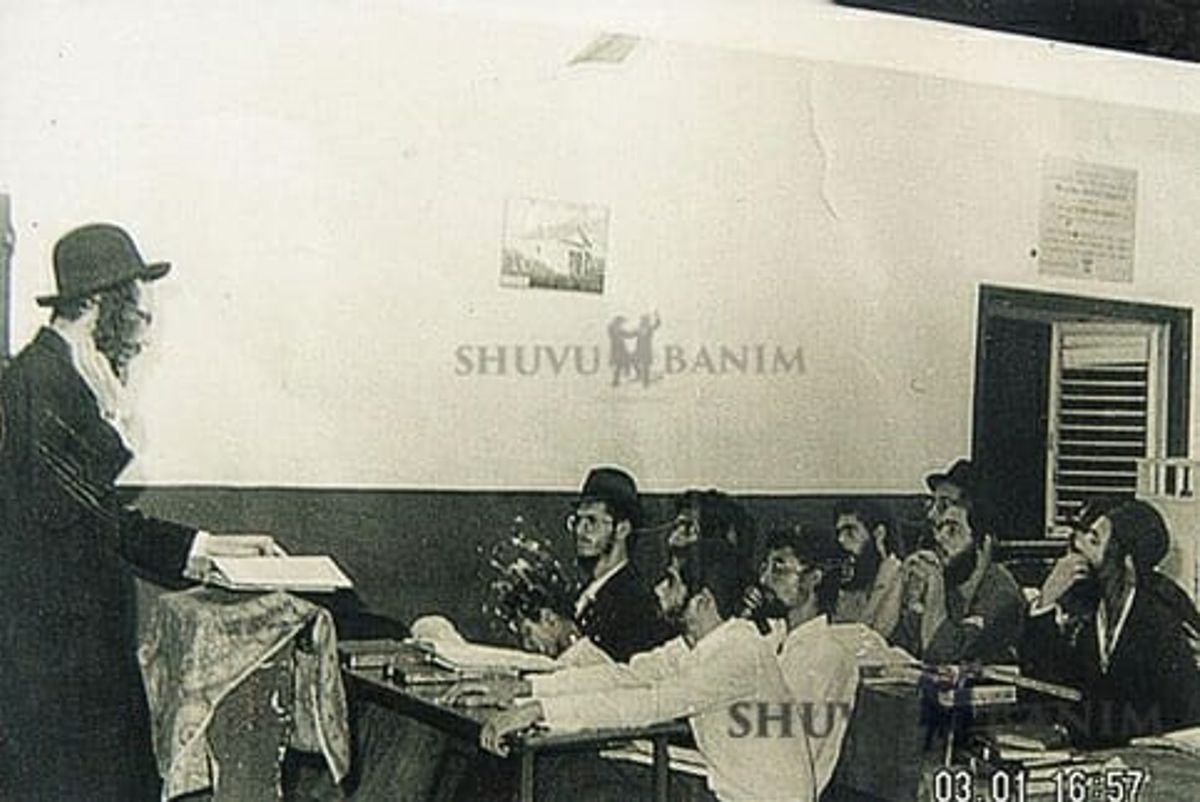
"When I arrived at the Yeshiva," Rabbi Gol continues, "I heard that there was an exclusive shiur given by Rav Berland to a small group; it was an in-depth shiur that not everyone was suited for. I, too, did not enter this shiur at first as I was a 'rookie' then; later on, I also merited to enter these shiurim. I remember a general shiur that Rav Berland gave to all the students; it was the first shiur I merited to hear from the Rav and it was tailored for all the Yeshiva members. It was truly miraculous how the Rav analyzed every detail. It was in the chapter 'Eilu Metziot'; the Rav asked a question that no one had thought of, and afterwards began to race through and analyze the words of the Rishonim—it was a true delight. We saw there an unconventional way of thinking.
In the exclusive shiur, there was something truly special. I remember when we studied the first chapter of Masechet Pesachim, at the end of which are the matters of Tumah and Taharah. Rav Berland 'swam' through it in an amazing way; he mastered everything. We had to prepare very, very well in order to keep up.
Rav Berland’s own study was so organized and clear that in order to understand what might be difficult for us, the Rav had to prepare the shiur beforehand with one of the students, and according to where he saw that the student struggled, he knew where we would struggle more. And yet, we still had to prepare a lot to keep up. The Rav would open many books; the entire Torah was spread out before him. We knew we had to prepare many Rishonim and Acharonim, and despite all that, there were always surprises. Everyone had good heads and were hardworking, but they still had to prepare a lot and keep a good focus. We knew that if we hadn't prepared the shiur, there was no point in entering; it was such sweetness. It is hard for me to define the time the shiurim took. We wouldn't feel the time passing, but it seems to me it was between an hour and two hours.
In later years, when he would give a Chassidut shiur, such as on the book 'Sippurei Ma'asiyot' (I believe it was at the instruction of R' Levi Yitzchak zt"l), he would give a shiur of about twenty minutes to half an hour. The shiur was so condensed that it would take two hours to review it in order to decipher and analyze all the material. There was once someone who remarked to the Rav that he should bring the source for everything. From then on, Rav Berland began to open books in every shiur. Every innovation of the Rishonim and Acharonim, he would open within the book. But we lost out because we lost the flow of the shiur, because when the Rav would open a book, he would linger on other matters that he would raise while flipping through the pages."
The Simplicity and Genius of Rav Berland in Torah Study
Rabbi Gol lets his memory drift back to those sweet days, and recalls several anecdotes in which he saw the uniqueness of the study of our teacher Rav Berland shlit"a. "The Rav's shiurim were shiurim of fire and flame, terrible genius, and unconventional thinking combined with amazing simplicity. It was something amazing. I will give you a few examples regarding the Rav's simplicity, specifically—his genius does not need confirmation. There is a Tosafot in Megillah (12b) that writes that the idea of 'that every man should bear rule in his own house' was the idea of Daniel, since he was married to Sarit, who was greater than him and he could not force her to speak in his language, so he advised doing so."

It was always difficult for me: Who could be more important than Daniel, who was a grandson of King David from the royal family? After all, it must be that his wife was Jewish, and if so, in what way was she more important than him? And why would she not want to speak the Holy Tongue? Once, in one of the shiurim, Rav Berland spoke about the Tosafot, and in the middle of his words, he said that his wife was a convert. That was it; with that sentence, the Rav answered my entire question. It is a simple answer, but a genius one; simply how to explain everything with common sense and special insight.
The First Personal Assistant of Rav Berland
Rabbi Gol now goes back many long years, to the year 5743, to the day he began to be the personal assistant to Rav Berland: "Until then, there was no concept of a 'gabbai' for our teacher the Rav, despite his having been engaged for about fifteen years in drawing the distant near and in spreading Torah with self-sacrifice in Bnei Brak, and afterwards with the move to Jerusalem in 5742.
In 5743, the change occurred," Rabbi Gol returns to those years. "For several days, our teacher the Rav did not come to the Yeshiva, and to our question, the Rabbanit tlit"a, who also sacrificed her soul and all her time for the sake of the Yeshiva, explained that a change needed to be made in several matters that were not to our teacher the Rav's liking. Among the things that came up was the need to appoint a gabbai and escort for our teacher the Rav. Our teacher the Rav agreed to the move, and so, on her advice, I was chosen to serve as the gabbai. I would escort the Rav from his house to our Beit Midrash and from our Beit Midrash to his house, as well as on his travels for the sake of the collective and the individual; likewise, in his house, I would bring in the people who came to receive blessings and advice.
For three and a half years I merited to hold this position, years in which I merited to see amazing and special things..."
Rav Berland’s Love of Torah
If we grasp the point of Torah study, it was truly alarming. After all, I would go in and out of our teacher Rav Berland’s house, and I never saw him without holy books; there were always dozens of holy books open before him, piles upon piles on the large table. So too, whenever I accompanied him everywhere—there was not one moment, one second without a book. Today, our teacher Rav Berland is not in the best of health and sometimes leans on a support, but back then, while he was in his strength, I never saw him lean on the chair; he always sat on the edge of the chair, all alert and hunched over the books.
All Secrets Are Not Hidden from Him
Rabbi Gol recalls a special anecdote in which one sees the love of Torah that burns within our teacher Rav Berland incessantly: "Once I entered our teacher the Rav’s room and told him a certain innovation of the Chatam Sofer. Until then, I had never innovated anything for the Rav that he did not know. Even unfamiliar Chassidic books, he always knew everything, except for things I innovated myself, which sometimes he accepted and sometimes not, but things written in holy books he always knew. In general, I and all the other students received from the Rav such a love of Torah, such sweetness. For example, the Rav would mention in shiurim innovations from the Bnei Yissaschar, from the Maor VaShemesh, Maor Einayim, Pri Tzaddik, Sefat Emet, Megaleh Amukot, Asarah Ma'amarot; he would bring everything in such a special and sweet way that I would run after the shiur to buy the book the Rav mentioned.
However, when I would buy and open them, I had darkness in my eyes; the books were from old editions, broken words, erased letters—just to understand the writing one had to concentrate all one's strength, and there was no strength left to understand the meaning. That was how it was when I bought Megaleh Amukot or Maor VaShemesh; it was in 'hieroglyphics,' and Rav Berland nevertheless would truly delight in it and present the things to us with such light and sweetness. Once, the Rav mentioned Maor Einayim. I ran to the store and accidentally bought a 'Maor VaShemesh' new edition, which I already had at home. When I arrived home, I understood the mistake, but I enjoyed it since it was a new edition, a magnificent publication. I began to read and simply delighted; suddenly I saw all the discussions the Rav had mentioned from the book.
Rav Berland caused me such a love of Torah that I already began to buy all sorts of obscure and unknown books from the great ones of the generations and Chassidut. I remember once I mentioned to the Rav an innovation of the 'Brit Avraham,' which is not such a well-known book, and the Rav immediately told me where it was written.
Let us return to the story I started. I mentioned to Rav Berland the innovation of the Chatam Sofer. And that was the only time I innovated something new to the Rav. The Rav was so enthusiastic, he jumped from his place like a child and asked me if it was in the 'Chatam Sofer' or in 'Torat Moshe' (since the Chatam Sofer has two books on the Torah: Chatam Sofer and Torat Moshe), and I answered the Rav that I didn't remember. The Rav immediately ran to the library and with enthusiasm pulled out the 'Chatam Sofer' (or the Torat Moshe) and then ran immediately to the second room and brought the second book, and in the meantime, I had already found the innovation. The Rav enjoyed and was so enthusiastic; it was a heartwarming sight of the love of Torah that burns within the Rav. After all, there are many people whose heads are overloaded with innovations, and a new innovation no longer moves them, but with the Rav, every new innovation is received with rare and special enthusiasm...
By the way, I once asked someone who studied with someone considered the greatest of the Kabbalists, and even with our teacher Rav Berland, books of Kabbalah, and I asked him who is greater in Kabbalah? And he said to him that greatness and righteousness are hard to measure between the Tzaddikim, but regarding the understanding of things, one leaves our teacher the Rav with much more clarity."
Rav Berland’s Prayer Service

"Once," Rabbi Gol tells us to give us a small glimpse into the prayer service of our teacher the Rav, "I was with the Rav in some house and the time for Mincha prayer arrived. The Rav said to me: 'We will pray Mincha for a few minutes and afterwards we will continue to some urgent matter.' The Rav began Mincha, and for four consecutive hours he stood in the Amidah... Once I was with the Rav in a field and the Rav said to me, 'I am debating whether to return now to the Yeshiva and pray Mincha there for a minute or two, or to stay here and pray like a Jew.' And I was surprised, after all, in the Yeshiva they pray Mincha for close to an hour and for that the Rav says 'a minute or two'; that gave me a look into his prayer service...
Also inside the house, he would pray for hours upon hours, the entire Amidah, much more than he would pray in public, where he would shorten it very much (relative to what he did at home), and everything was with melodies and songs, time after time...
So too on Shabbat. On Shabbat morning, the prayer with Rav Berland in the Yeshiva was with immense and terrible vitality, hours upon hours; afterwards there was also Mincha and Seudah Shlishit, and when they asked our teacher the Rav if it was possible for him to stay there also for Seudah Revi'it, he would stay with us. The meal with the songs and words of Torah lasts for many hours."
Praying as if Nothing Happened
One of the special events in the Yeshiva was the Hachnasat Sefer Torah (bringing in a Torah scroll). On the way in the Old City, there was a special inspiration. Rabbi Gol, who was the first to donate a Torah scroll to our Beit Midrash, was also the one who managed the entire process of the procession and all the logistics of the uplifting event.
So too it was in the Hachnasat Sefer Torah in memory of the holy Eliyahu Omedi HY"D in the year 5748. "In that Hachnasat Sefer Torah, the situation was tense; the Arab neighbors were causing a lot of trouble. When we reached the street of the Yeshiva (Ma'aleh HaHalidia) and began to climb the stairs, a hail of stones began to be thrown at us. And behold, precisely there, Rav Berland signals us to dance... We opened in circles while we were crowded and close, and a hail of stones poured down on us. And behold, it is a wonder, not even one stone hit us! They fell between the narrow gaps between us. It was something above nature. The policemen became stressed, and when they saw that we were continuing to dance, they began to spray us with tear gas, and I see how a tear gas grenade falls exactly between the legs of Rav Berland; everyone scattered, and I ran with the Rav's students to the Seraya street to be saved from the tear gas.
A few minutes passed in which we assumed that the strength of the tear gas had expired, and we began to climb back towards the Yeshiva. But we were wrong in our assessment; the place was full of gas and we almost suffocated. We climbed in a fast run to the Yeshiva, where they poured quantities of milk on us. In the Beit Midrash, I see that everyone is coughing and groaning, except for our teacher the Rav, who is standing at the Amud, and praying Arvit with peak enthusiasm and calm; there are no coughs and no tear gas. The Rav is all in ecstasy, praying with holy flames, and all this when the tear gas grenade fell closest to him..."
Sleeping at Midnight?
Rav Berland would almost not sleep at nights at all; there was almost no such concept for him (the Rav's sleep was a few hours in the morning hours). "I remember that once I traveled with the Rav to one of the Breslov Chassidim; it was at the hour of midnight. And when we arrived, they told us that he was sleeping. The Rav was struck with astonishment. Is it possible that a Breslov Chassid sleeps at midnight? Such an idea was not grasped in his mind... By the way, Rebbe Levi Yitzchak praised the Rav before his son-in-law for the greatness of the Rav's innocence."
Charity and Kindness of Rav Berland
On the subject of charity and kindness of our teacher Rav Berland, Rabbi Gol has dozens of stories, from which he chooses two: "One day I brought the Rav an envelope that arrived from abroad and inside it seemed there was a respectable sum. The Rav was immersed in his study and pushed the envelope with his fingers, and not a few minutes passed and someone knocked on the Rav's door to ask for salvation; I brought him in and he apparently told the Rav about a financial problem, etc. Rav Berland took the entire envelope and handed it to his hands without checking how much it contained. I saw from this how the kindness to the other burns in Rav Berland; what stunned me is how the Rav has no curiosity at least to know what amount is involved."
Giving Everything to the Other
Once I went with him to the Mikvah in the Old City. The attendant was the Chassid R' Mordechai (Shabtai) Horovitz zt"l. When the Rav arrived, R' Mordechai said to the Rav that he deserved a 'Mazal Tov' as he had engaged his son in a good hour. The Rav immediately took out and emptied all his pockets of all the money that was in them; a pile of crumpled bills piled up on the table and passed entirely to the father of the groom... Later it turned out to me that it was a particularly large sum.
Giving the Other a Good Feeling

"One day Rav Berland was eating dinner, and behold, a childhood friend came to visit him. The Rav began to convince him to wash his hands and eat something, but the latter did not feel comfortable sitting and eating, and tried to evade by saying that he was not hungry. The Rav pressed him again and he responded and said that if our teacher the Rav would eat, then he too would eat. The Rav, who had just finished eating, said to his friend, 'Yes, I too was thinking just now of eating,' and the Rav washed his hands and sat down to eat dinner again to make the other feel pleasant, who joined also with a good heart..."
Eating and Saying Nothing
It happened once that the amount of salt was doubled by the cook by mistake, and the food came out particularly salty in a way that it was hard to eat. The Rav, who did not want the one who cooked to feel anything, ate, and asked for more and more of the soup in the hope of finishing it. But the Rabbanit, who was surprised that the Rav wanted more, when usually he is satisfied with the little of the little, thought that maybe this time it came out special more than usual; she tasted the soup that the cook had prepared and understood the special consideration of our teacher the Rav... "Here is the place also to mention," Rabbi Gol tells us, "what the Rabbanit told me more than once, that the Rav never opened the refrigerator, never looked for food; if it was before him he ate, and if not, he was satisfied with his study and his service of Hashem. He could return from hours in the field or hours in the Kollel and be satisfied with a small cup of coffee and nothing more..."
Salvations with Rav Berland
Miracles and Ruach HaKodesh, Rabbi Gol saw with our teacher Rav Berland hundreds and thousands, and he shares with us some of them.
There was one boy in the Yeshiva who would suffer from time to time from various outbursts. It was truly difficult for him, and one day he approached the Rav and cried to the Rav. That night, Rav Berland slept in the Yeshiva; one of the boys slept with the Rav in the room, and heard how our teacher the Rav was praying with tears for that boy; it was a heart-rending sight. When the Rav noticed that the boy was not sleeping and was hearing him, the Rav approached him, pulled the blanket over his head, and the boy fell asleep immediately... Needless to say, that boy who suffered from the outbursts was saved!
Likewise, there was one Avreich whose wife suddenly lost her mind and could not function. The Avreich was broken and crushed, and every time he asked Rav Berland for a blessing, the Rav told him: 'Don't worry, it will pass.' Once, when he could not bear the situation, I brought him to our teacher the Rav, and he said to the Rav that he was not leaving the room until the Rav acted on something. The Rav took a page and drew all sorts of lines on it, and asked the Avreich to place it under his wife's pillow; the latter did so and the next day everything passed as if it never was..."
Answers to All Questions
Once I was at a Brit with our teacher the Rav. During the dance, the Rav threw a sentence at me regarding a certain matter and I didn't really understand the Rav's intention. I would usually write down for myself questions when I had something to ask Rav Berland; I would ask them only after I would finish studying with the Rav in his house, because immediately the Rav would begin to study with me. So it was also on that day of the Brit; I had a list of nine questions, and the tenth question was what the Rav intended to tell me in the dance. During the study with the Rav, I received from the Rav an answer to all nine questions! Without me presenting even one of them, and then I pondered in my mind regarding the tenth question, as after all, Rav Berland certainly knows the question, as he answered me all nine questions... So I hesitated, and began to walk towards the exit, with the Rav escorting me to the door, and I am walking with my face to the Rav because of respect, and also to merit to snatch another look at the Rav, and all the time the doubt ate at me, to ask or not to ask. I was ashamed to ask. When I stood at the door, the Rav turned to me suddenly and said: 'And regarding what I said to you in the dance, I intended that you should do so and so...'
Every Delay is for the Best - Why Rav Berland Delayed
One day we had to go to a lawyer to sign some contract. Rav Berland was late in going, and when we left, there was one who all the time complained that we were not standing on time. When we arrived at the lawyer, he came out of his house barefoot, and in an unusual way that gave us to understand that the person was not stable in his mind. Our delay caused him to get angry and show his true face, and for us, there was nothing left but to see the miracle and understand that all the delay was for the best...
When mentioning the matter of a delay for the best, I remember the first Hachnasat Sefer Torah to the Yeshiva building in the Old City. Rav Berland arrived with a delay of two hours. After a few days, an Avreich approached me and told me in his innocence that at exactly that time, the Rav was at his place to comfort him on the passing of his son. And he said to me: 'What can I tell you? The only one who succeeded in comforting me truly was the Rav.' Then I understood why the Rav was so late.
Before we part, Rabbi Gol wants to add a sentence: "I want to finish that my love for the great ones of Israel in our generations and in the previous generations, in Breslov and outside it in all sectors, everything is in the merit of Rav Berland. I saw his love for everyone, and he taught us this. And the whole matter of the 'famous ones of falsehood,' after all, the man of G-d R' Avraham b"r Nachman says that this is what everyone needs to think about himself, but to respect and cherish all the great ones of Israel... May Hashem merit us with the coming of the Redeemer and the revelation of the light of the Tzaddik and that we merit to always strengthen ourselves in the faith and love of all the Tzaddikim, Amen..."
Subscribe to Our Newsletter
Receive Torah articles and inspiration directly in your inbox