The Man Who Saved Breslov — Rabbi Berland shlit"a on His Teacher, Rabbi Levi Yitzchak Bender zt"l
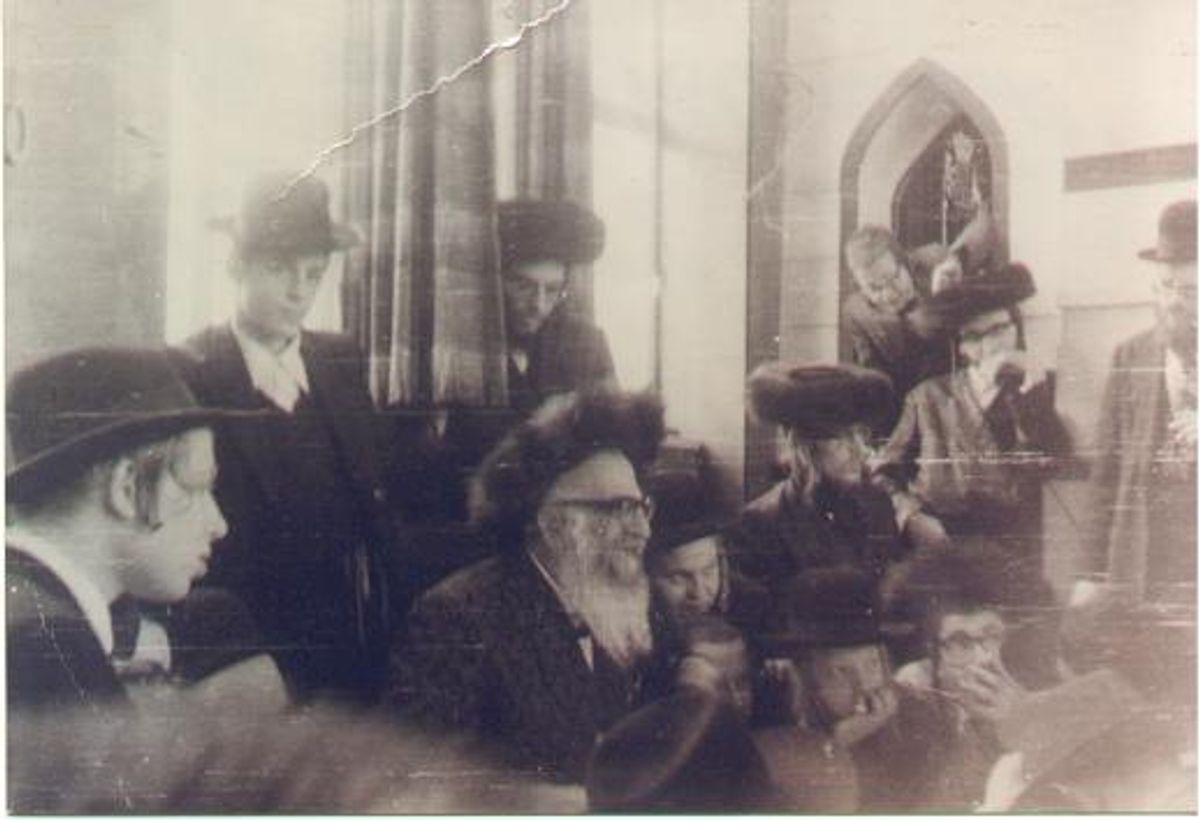
Every year, as evening falls on the 22nd of Tammuz, Rabbi Berland shlit"a lights a candle in memory of his teacher. This is not merely a standard mitzvah candle—it is the candle of a student for his teacher. "If not for Rabbi Levi Yitzchak," says Rabbi Berland shlit"a, "there would be nothing. He saved, he saved Breslov." Two sentences that contain the entire story: one hidden man upon whose shoulders an entire unbroken chain was passed from Uman to the Land of Israel.
Who is this man, whom an entire generation has grown up without knowing? "Today there is already a new generation," Rabbi Berland shlit"a laments, "who did not see Rabbi Levi Yitzchak, and they do not know who he is." Let us get to know him.
The Train to Uman
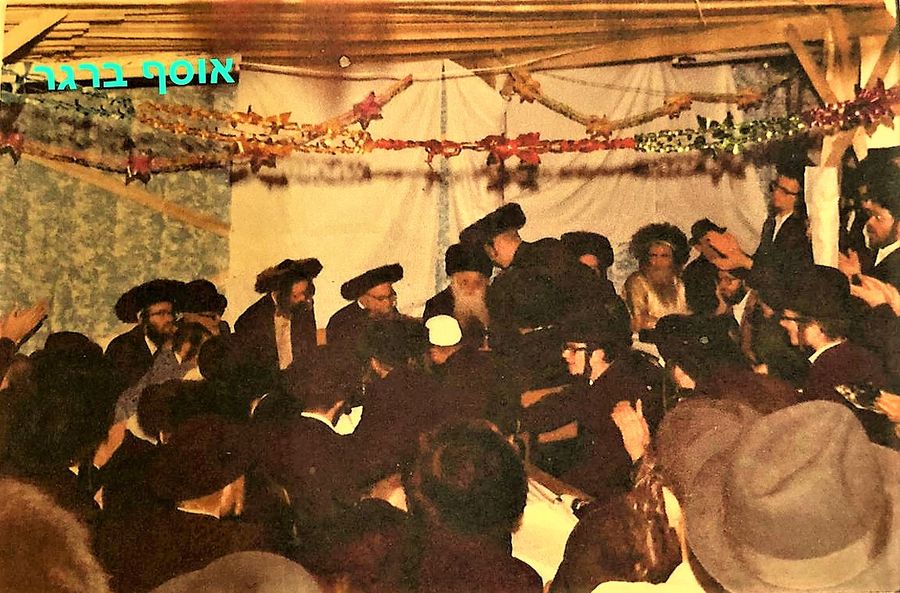
Rabbi Levi Yitzchak was born in the city of Grodzisk, Poland, in the year 5657 (1897). While still a youth, he left everything and traveled to Uman to take shelter in the shadow of the Breslov giants, led by Rabbi Avraham ben Rebbe Nachman. Rabbi Berland shlit"a recounts his mesirus nefesh (self-sacrifice) to travel to Uman: He arrived at the train station, and ten thousand people were standing on the platform—how would he board? "Suddenly, someone saw him standing there and said, 'Give me your suitcase'—and pulled him up through the window. To this day, he never knew who it was—it was Eliyahu HaNavi (Elijah the Prophet)."
And not only that. During the years of the pogroms, they stood Rabbi Levi Yitzchak in front of the firing squad and told him to recite Vidui (the confession prayer before death)—"Suddenly, a heavenly voice emerged and released him." When he arrived at the neighboring village, it became clear that all its Jews had been slaughtered; "If he had arrived an hour earlier, they would have slaughtered him as well." During the years of famine under the Communists, when everyone was swollen from starvation, he traveled to Uman without shoes, with only rags tied around his feet. "His mother saw him and fainted on the spot, so swollen and pale was he."
Within the Prison Walls
Rabbi Levi Yitzchak and Rabbi Eliyahu Chaim Rozen were imprisoned by the Soviet regime—"Why do you want to overthrow the entire government?" they claimed against them—and they faced the danger of death. Rabbi Levi Yitzchak sat imprisoned from the week of Parashas Vayeira until the eve of Shabbos Zachor. Inside the cell, Rabbi Eliyahu Chaim asked: What do we do? Rabbi Levi Yitzchak replied: "Let us recite Chatzos (the midnight lamentation over the destruction of the Temple) for the last time in our lives... Let us speak about Rebbe Nachman—there are no prisons here, there is no Pharaoh here, and there is no Stalin here; Rebbe Nachman rules over all the worlds."
And in the interrogation room, instead of defending himself, he gave the interrogator "a full hour's lesson on what Breslov is"—and at the end of it, he was released. "Ultimately, the regime fell bizchus (in the merit of) Rabbi Levi Yitzchak, in the merit of the journeys to Uman," says Rabbi Berland shlit"a, "because the moment one speaks of Rebbe Nachman—all the walls of the Sitra Achra (forces of impurity) fall." Half a year earlier, a seventeen-year-old boy had prophesied the exact day of their release—the eve of Shabbos Zachor—"and no one understood where he got such Ruach HaKodesh (Divine inspiration)."
And this is not only a story of heroism but of loving-kindness. When a Breslov chassid named Rabbi Baruch was placed in his cell, broken by suffering and attempting to take his own life, Rabbi Levi Yitzchak awoke from his sleep. He screamed terrible cries until the guards opened the door and found the man with his head already inside the noose, and Rabbi Levi Yitzchak did not cease encouraging him.
The Hidden Rabbi of Germany
After the war, Rabbi Levi Yitzchak became the rabbi of the She'eris HaPleita (the surviving remnant of the Holocaust) in Germany, where he saved countless agunos (chained women unable to remarry). There was a story of a woman who received a signed letter from the army—"from the Chief of Staff, from Stalin"—stating that her husband was no longer alive, granting her permission to remarry. However, twenty-four hours before her wedding, a letter arrived from Rabbi Levi Yitzchak's son in the Land of Israel: The "dead" husband was alive and well! Rabbi Levi Yitzchak caught the first train and reached her twenty-four hours before the chuppah: "Your husband is alive and well!"
He had a sense that no one else possessed: The German women who disguised themselves as Jews and deceived all the rabbis—they could not fool him. "He always had some sign, something in the tone of their speech, something in their smile—and he would immediately discover that she was a non-Jew." Then, when he immigrated to the Land of Israel, he set all his greatness aside: "Previously he was the greatest rabbi in Germany, but he arrived in Israel and said: Here I am no longer a rabbi, it's over—the air of the Land of Israel makes one wise." A great man who chose to disappear. He never missed Chatzos; he would sleep for two or three hours, wake up at midnight, recite Chatzos, spend an hour in Hisbodedus (personal secluded prayer), and return to his studies—"This was his schedule until his very last day, until the age of ninety-two."
Prayers that Shook the Walls
Whoever heard his prayers never forgot them. "His prayers would shake the foundations, the ceiling would almost split open," describes Rabbi Berland shlit"a. During 'Nakdishach' and 'Keser' (parts of the Kedushah prayer), he would "become like a red beet, his face literally red, like a flaming fire." Even inside the camps of terror, among the Nazis, he would shout: "Learn, learn Mishnayos! Hold onto a book of Mishnayos—and then the Nazis will have no dominion over you." And at the peak of despair, he called out: "There is no despair at all—now the Nation of Israel is rising anew."
What the Elder Saw in the Student
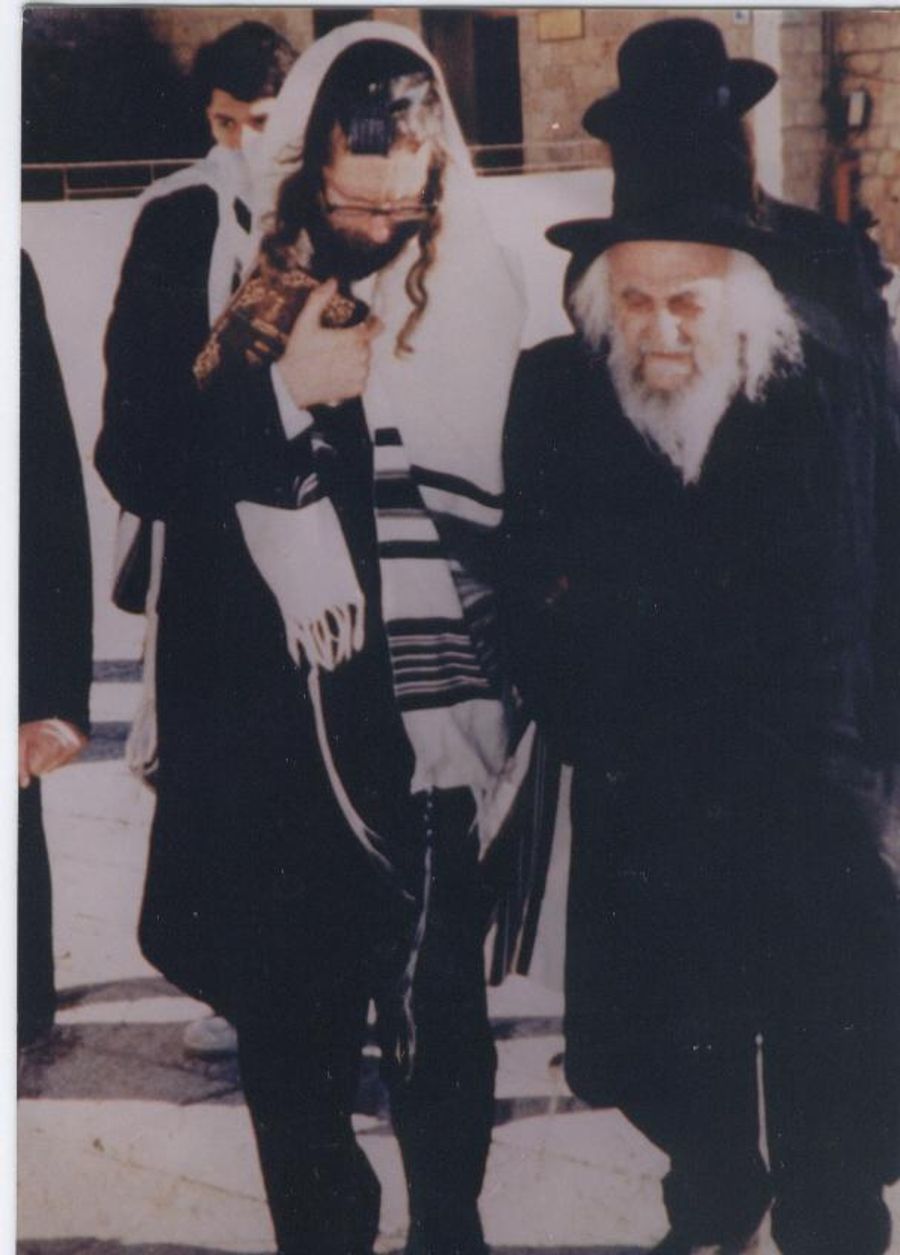
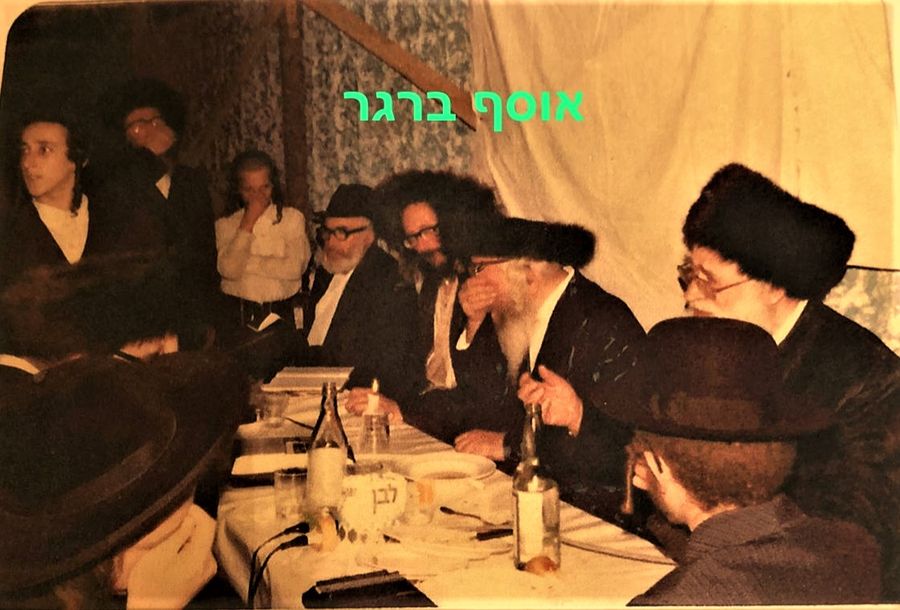
"When I entered," says Rabbi Berland shlit"a, "in 5727 (1967) it was already possible to come to the Western Wall, and I began to draw close to Rabbi Levi Yitzchak and Rabbi Shmuel Shapiro. I saw an organized Breslov chassid—until then, such a thing had not been seen, that one could sit and learn Mishnayos, Gemara, and Shulchan Aruch, and also be a Breslov chassid." The young Torah scholar clung to his teacher with devotion: He spent entire nights in Hisbodedus in the fields to merit his light, and served him at the Western Wall. It is told that once at a seudah (festive meal), Rabbi Levi Yitzchak mentioned the prohibition of speaking while eating, and immediately the young scholar quoted the words of the 'Shaarei Teshuvah'—and the elder was amazed by his vast knowledge.
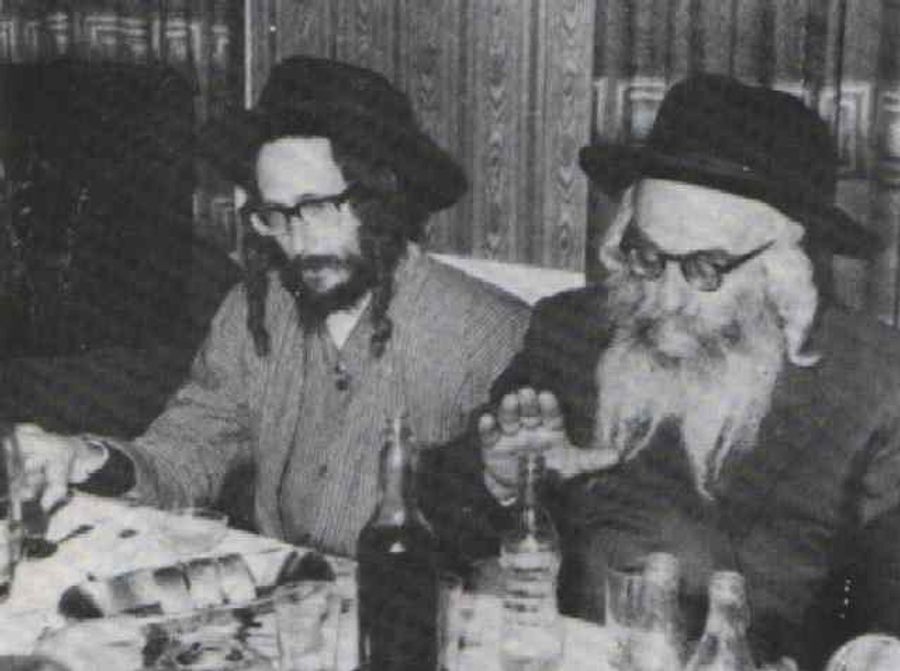
And what did the elder say about his student? When they asked him if he minded that Rabbi Berland bought a burial plot next to him, he replied: "Heaven forbid. Rabbi Leizer is a good neighbor." And when they jokingly remarked to him: "Rabbi Leizer is taking all his opponents to Uman," he replied: "Rebbe Nachman owes him a great debt of gratitude for this." Regarding the difference between their paths in divine service, he said: "Every single tzaddik has his own path." He clung to him to such an extent that Rabbi Berland shlit"a sold the apartment he received as a wedding gift and gave half the money to Rabbi Levi Yitzchak.
Chatzos Every Night, Until the Last Day
And here are the most touching words of all—the personal testimony of Rabbi Berland shlit"a: "I learned with Rabbi Levi Yitzchak before his passing. I sat and learned with him almost until the very last moment, until the last day—an hour every Chatzos. In the last half year, I would learn with him every midnight." Night after night, deep into his final years, the two sat head-to-head in study.
In one of his last classes, a few weeks before his passing, Rabbi Levi Yitzchak did not speak about himself but rather pleaded for unity: "It is impossible to even imagine how much Rebbe Nachman can reveal to us and bestow upon us—if only all Breslov chassidim would be united as one." This was his final will and testament.
On the 22nd of Tammuz 5749 (1989), at the age of ninety-two, Rabbi Levi Yitzchak returned his pure soul to its Creator. "He never trembled," says Rabbi Berland shlit"a, applying to him the Torah's words about Moshe Rabbeinu: "His eye was not dim, nor his natural force abated." He was interred on the Mount of Olives.
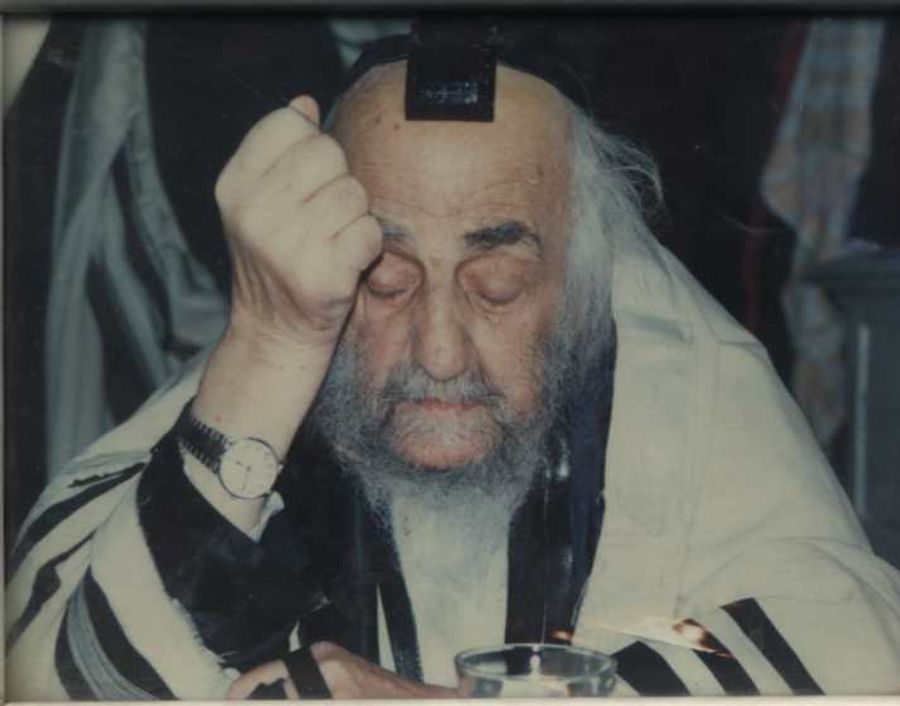
Rabbi Berland shlit"a teaches that the entire essence of Rabbi Levi Yitzchak was earnestness and simplicity, and that he is a link in the chain of tradition: from the holy Rebbe Nachman to Rabbi Nosson, to Rabbi Nachman of Tulchin, to Rabbi Avraham ben Rebbe Nachman—and to him. When Rabbi Berland shlit"a lights the candle on the 22nd of Tammuz, it is not merely lighting a memorial candle—it is a promise that the fire handed down by Rabbi Levi Yitzchak will continue to burn, and will be passed onward.
May his memory be a blessing.
Sources
The stories in this article were gathered from the classes of Rabbi Berland shlit"a (verified transcripts), and additional documented sources:
- From the classes of Rabbi Berland shlit"a: 16 Iyar 5755; 26 Iyar 5755; Eve of 8 Nissan 5759 (Kiryat Sefer); Eve of 9 Adar 5761 ("Shaarei Torah" Yeshiva, Jerusalem); Eve of 6 Shevat 5763 (Kollel Shadarim, Pardes Katz); 18 Iyar 5765; 17 Menachem Av 5765; 13 Cheshvan 5766; 17 Teves 5766; 24 Sivan 5766; 22–23 Tammuz 5766 (The eulogy for the day of the Hillula); 2 Av 5766; 7 Adar 5767; and the yahrtzeit of Moharnat 5770.
- The words of Rabbi Levi Yitzchak about Rabbi Berland shlit"a — from "Rabbi Levi Yitzchak Bender zt"l on the Grand Rabbi Eliezer Berland."
- The last conversation of Rabbi Levi Yitzchak (the request for unity) — from "Noam Siach," 19 Sivan 5749.
- Biographical details and the date of the Hillula (anniversary of passing) — according to documented sources.
Subscribe to Our Newsletter
Receive Torah articles and inspiration directly in your inbox