
The Secret of the Shofar: Canceling the Contract with the Yetzer Hara
Lesson No. 88 | Sunday, 20 Nissan, 5th day of Chol HaMoed Pesach, Eve of the Seventh of Pesach 5757 - at the Yeshiva
A person often finds himself bound by an old contract with the Yetzer Hara (evil inclination), sunk in spiritual slumber and worldly desires. Through the secret of blowing the Shofar, the power of trust in Hashem, and listening to the voice of the tzaddik who calls out to us to hold on, we can break through all boundaries and achieve true freedom.
The concept of "length of days" depends on a person's spiritual work every single day. At the beginning of the day, the work is very difficult; it is hard to start learning, hard to serve Hashem, and therefore the day seems "short" to the person, because his divine service progresses very slowly. However, a person's task is to figure out how to enlarge, expand, and lengthen every subsequent hour. Every hour must be greater than the previous one, infused with an extra measure of holiness. When a person constantly adds holiness to his days, he achieves the true secret of length of days.
Breaking the Contract with the "Baal Davar"
This concept explains the secret of the Shofar—Tekiah, Shevarim, and Teruah. A person, in his natural state, acts as if he has made a covenant and a contract with the "Baal Davar" (the Yetzer Hara). He feels that he cannot learn Torah, cannot wake up for Chatzos (midnight prayer), and cannot cry out to Hashem. This is an actual contract with the Yetzer Hara, about which the verse states:
"You have been snared by the words of your mouth" (Proverbs 6:2).
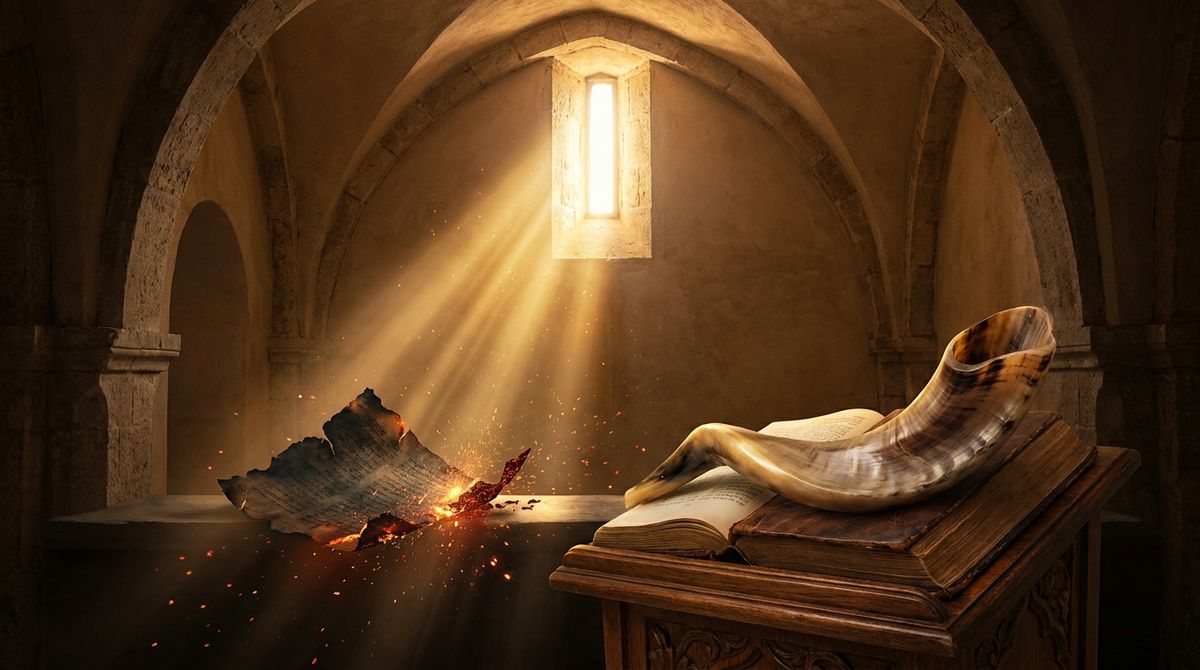
Rebbe Nachman explains that the "Tekiah" (the long, straight shofar blast) symbolizes the state in which a person is "takua" (stuck)—trapped in his desires, his deep spiritual sleep, his slumber, and the Yetzer Hara. He is stuck in that same old contract he made with the Baal Davar throughout his entire life, and even in previous incarnations.
When a new flow of Divine abundance arrives, such as on Rosh Hashanah, a person wants to start anew and cancel the contract. But the Baal Davar comes to him and says, "We are good friends! Why do you suddenly want to cancel our contract?" He refuses to let him break free. In order to cancel what was before—and every day and every hour one must cancel the past—the first thing we must do is cry out with all our strength. We must weep to Hashem from the depths of our hearts over everything we have done. This is the "Teruah" (the series of short, staccato blasts), which represents the aspect of speech and crying out.
Afterwards come the "Shevarim" (the broken blasts). The Shevarim symbolize trust. Even when I see how far I have fallen and where I currently am, I have absolute trust in Hashem and in the tzaddik, who will certainly help me escape everything I am going through. This is the secret of the verse, "his hope (sivro, related to shevarim) is in Hashem his God" (Psalms 146:5)—the absolute trust that we will break out of all our narrow straits until we reach ultimate perfection.
King David's Emunah at Ziklag
We find a clear example of this trust with King David. When David and his men returned to Ziklag, they found the city completely burned to the ground. There were no children, no families; everything was reduced to ashes. At that moment, his closest friends and loved ones wanted to stone him. They confronted him, saying: "Where have you led us? King Saul was in our hands twice, yet you brought us to live among the Philistines, and now everything is destroyed!"
King David saw everything burned before his very eyes. There was no sign of life, and it appeared that everyone had been burned alive, Heaven forbid. He did not know at that moment that they had been taken captive and were still alive. Yet, in that terrible moment, David refused to believe what his eyes were seeing.
King David said: "Hashem, You will not abandon me! Even in such a moment, even in such a situation, it is impossible that Hashem would ever leave me." He knew that if he practiced self-sacrifice for Hashem, Hashem would certainly save him and their families. This is the power of pure emunah (faith) that remains entirely unswayed by what the physical eyes see.
The Voice of the Tzaddik's Loudspeakers
The same applies to our divine service. A person sometimes feels disappointed; his mouth is blocked, and he loses his trust and emunah. He asks himself: "Will Hashem really help me? Why on earth would He help me? Am I His son? What does He owe me?" But the truth is that every single Jew is considered:
"My firstborn son, Israel" (Exodus 4:22).
When a person instills this deep trust within himself, his mouth suddenly opens. He begins to learn Torah, to wake up for Chatzos, and to pray with tremendous strength. He realizes that every word of the tzaddik and of the Torah will undoubtedly be fulfilled within him.
The true sage (the tzaddik) is constantly crying out to us. He has shofars, and he declares: "Just hold on, I am coming to get you!" This can be compared to a person who has had an entire mountain collapse on top of him. The rescue teams bring bulldozers and tractors to dig through the rubble and reach him. They know he is alive, but they are terrified that he might die of despair under the wreckage. What do they do? They shout to him through massive loudspeakers: "Hold on! In just a day or two, we will reach you!"
This is exactly the situation of a person in this world. He is buried under mountains of sins and transgressions, and the tzaddik must clear it all away to rescue him. The tzaddik shouts to him through tremendous loudspeakers—through his holy books, his advice, and the practice of Hisbodedus (personal prayer): "Hold on! I am coming to get you!" If a person will only listen to the voice of the tzaddik, if he will continue to live, continue to roar, continue to yearn and desire to escape his narrow straits—the tzaddik will absolutely never abandon him, and will surely rescue him from all the mountains that have collapsed upon him.
Part 1 of 2 — Lesson No. 88
All parts: Part 1 (current) | Part 2
Subscribe to Our Newsletter
Receive Torah articles and inspiration directly in your inbox