Through the Recitation of Kinnot (Lamentations)
Everyone Merits to Rectify All Six Hundred Thousand Souls from the Root of Their Soul • An Awesome Prayer for the Day of Tisha B'Av from the Gaon and Tzaddik Rabbi Eliezer Berland shlit"a
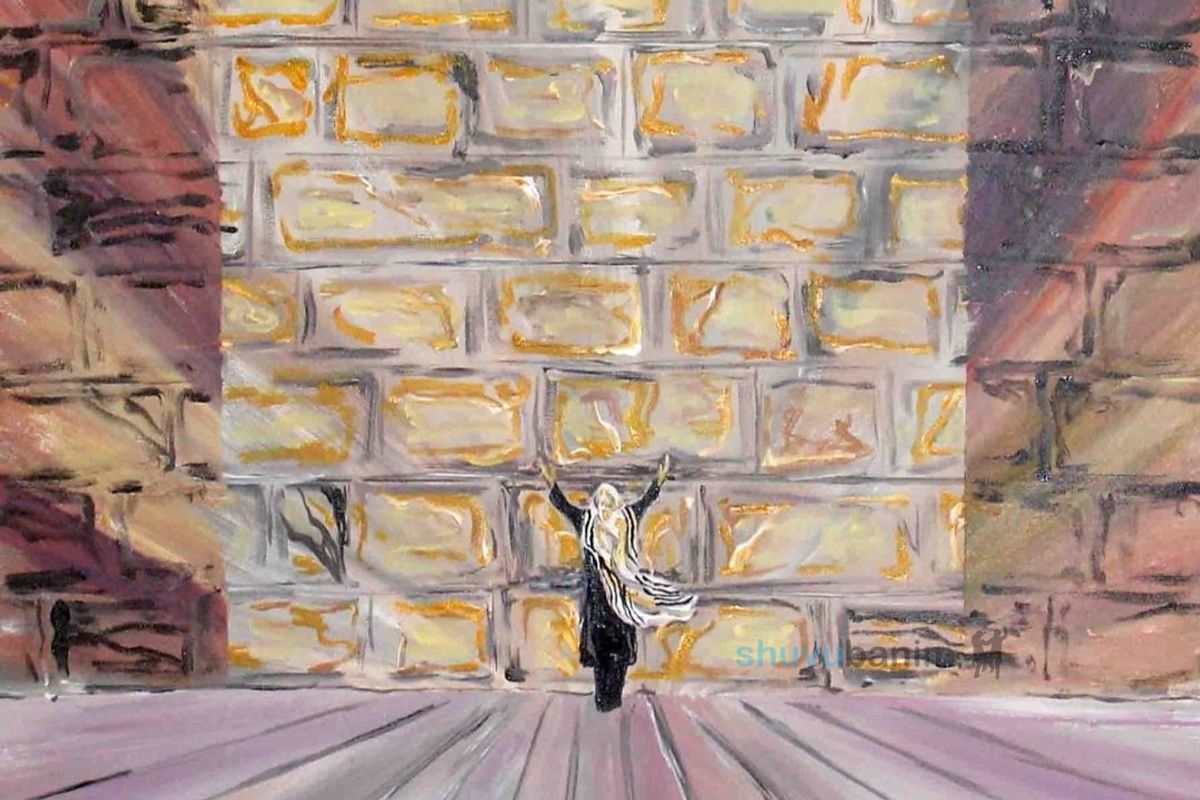
1956 years since the destruction of our Holy Temple. Before you is an awesome prayer written by the Gaon and Tzaddik Rabbi Eliezer Berland shlit"a (may he live long and good days) for the day of Tisha B'Av (the ninth of Av), in which he reveals a glimpse of the greatness of this awesome day. He writes with tears about the terrible years of destruction and how, through the Kinnot (Lamentations) where we sit on the ground and cry, we merit to rectify all of this.
Master of the Universe, on Tisha B'Av, when the Yesod of Atzilut (the Foundation of the World of Emanation) is revealed through the rectification of the 405 Gevuros (Divine Severities), we draw down the 3,700,000 lights that were taken from Chavah (Eve) and rectify the 1,500,000 lights taken from Adam HaRishon (the first man) by starting the Aleph-Bet anew in its proper order. Therefore, Tisha B'Av always falls on the same day of the week as the first day of Pesach (Passover), in the month of spring, for then we rectify the Aleph-Bet in order according to the twelve tribes who offered their sacrifices for the rectification of all generations. This is like Nachshon ben Amminadab, who offered 21 sacrifices to rectify all generations. And "one young bull" (Par Echad Ben Bakar) was offered to rectify Hezekiah (Chizkiyahu), who refused to sing praise and become the King Mashiach (Messiah) and bring down the Holy Temple of fire. However, this also depended on the teshuvah (repentance) of Josiah (Yoshiyahu), of whom it is said, "There was no king like him who returned to Hashem with all his heart, all his soul, and all his might... and after him, none like him arose." The main thing depended on Jotham (Yotam), corresponding to whom Nachshon offered "one lamb in its first year for a burnt offering," who never opened his eyes and never saw anything [forbidden]. Through the combination of these three kings, Nachshon hoped we would merit the complete Geulah (Redemption) and the bringing down of the Holy Temple of fire, for Amram is the secret of "Amar Nakei" (pure wool), as in the secret of "I saw until the thrones were placed and the Ancient of Days sat, His garment was white as snow and the hair of His head was like pure wool."
But Manasseh (Menashe), who caused Israel to sin for 22 years, slaughtered a thousand people a day, placed an idol in the Sanctuary, offered a lizard on the Altar of Hashem, and forced a copper cover over the Heavenly fire that burned on the Altar of the burnt offering—in his days, the people of Israel began to worship idols from which they never turned back. Therefore, all the wicked of Israel in that generation never leave Gehinnom (Purgatory), except solely in the merit of those who sit for 18 hours on the ground and cry bitterly over those souls who caused the terrible destruction and did not return in teshuvah (repentance), even when they were at the brink of the pit. They continued to hurl the stones of the catapults back at the enemy and did not have the wisdom to truly repent, for they were among the "mighty ones" (Gibborim) and the "fallen ones" (Nefilim) who cast their fear in the land of the living.
Even King Josiah (Yoshiyahu), who corresponded to the "ram for a burnt offering," burned the chariots of the sun in fire. He smashed the altars on the roof of the upper chamber of Ahaz which the kings of Judah had made, and the altars Manasseh had made in the two courtyards of the House of Hashem; the king smashed them and ran from there, throwing their dust into the Kidron Valley, just like a house afflicted with tzara'at (leprosy) where the house is demolished and its dust thrown into the valley. For without the Tzaddik, at every single second, "Sihon king of the Amorites and Og king of Bashan" arrive and throw a mountain three parsa'ot (leagues) large upon us—meaning they throw back all three of our daily prayers, in the aspect of "a servant who poured a cup for his master, and the master poured the pitcher back in his face" (Likutey Moharan II, 8).
Even "the high places that were before Jerusalem, to the right of the Mount of Destruction, which Solomon king of Israel had built for Ashtoreth the abomination of the Sidonians, for Chemosh the abomination of Moab, and for Milcom the detestable thing of the children of Ammon—the king defiled them. He broke the monuments and cut down the Asherah trees and filled their places with human bones. Also the altar that was at Bethel, the high place made by Jeroboam son of Nebat who caused Israel to sin—that altar and the high place he smashed; he burned the high place, ground it to dust, and burned the Asherah" (II Kings 23:14-15). Josiah turned and saw the graves on the mountain; he sent and took the bones from the graves and burned them on the altar, defiling it according to the word of Hashem proclaimed by the man of G-d. He asked, "What is this monument I see?" and the men of the city told him, "It is the grave of the man of G-d who came from Judah and proclaimed these things that you have done to the altar of Bethel." He said, "Let him be; let no one move his bones." So they left his bones alone, along with the bones of the prophet who came from Samaria (II Kings 23:16-18).
For on Tisha B'Av, when the 3,700,000 lights return and all the 405 Gevuros (severities) are sweetened, then the bones of the Prophet—who is the True Tzaddik—are rescued, and they deliver all the souls of the wicked who have been judged until now from the judgment of Gehinnom (Purgatory), in the merit that they had some connection to the bones of that Prophet, the True Tzaddik. For on Tisha B'Av, anyone who merits can elevate all the souls of the wicked from all generations and transform them from being completely wicked to being completely righteous, tying for them "the hope of the scarlet thread" and giving them a "sign of truth." For if Rahab, after 40 years of terrible sins where she sinned and caused the masses to sin, was reincarnated as Hannah who said, "My mouth is enlarged (Rahav) over my enemies," and she perfectly rectified all the sins of Rahab—for there is no sin in the world that the Tzaddik cannot atone for, especially on Tisha B'Av, which is the time for the rectification of all souls.
Every single person, by sitting on the ground and reciting the Kinnot (Lamentations)—and by turning the letters of Kinnot (קינות) into Tikkun (תיקון - rectification)—can rectify all the six hundred thousand souls from the root of his soul, from the sin of Adam HaRishon until the end of all generations. As Rabbi Shimon bar Yochai says (Sukkah 45b): "I am able to rectify all the souls of my generation," and with Rabbi Eleazar, all the souls from Adam HaRishon, and with Jotham ben Uzziah, all the souls until the end of all generations. Therefore, when we mention the soul of Jotham ben Uzziah, who is the "one lamb for a burnt offering" intended by Nachshon ben Amminadab—and therefore we say, "Accept my prayer like the sacrifice of Nachshon"—for Nachshon rectified the soul of Hezekiah son of Ahaz, the soul of Josiah son of Amon, and the soul of Jotham son of Uzziah. Through them will come the complete Geulah (Redemption) that Hezekiah missed. And through the recitation of the Kinnot (Lamentations), the letters of which form Tikkun (Rectification), we shall merit the complete Geulah (Redemption) in the blink of an eye, Amen, Netzach, Sela, Va'ed.
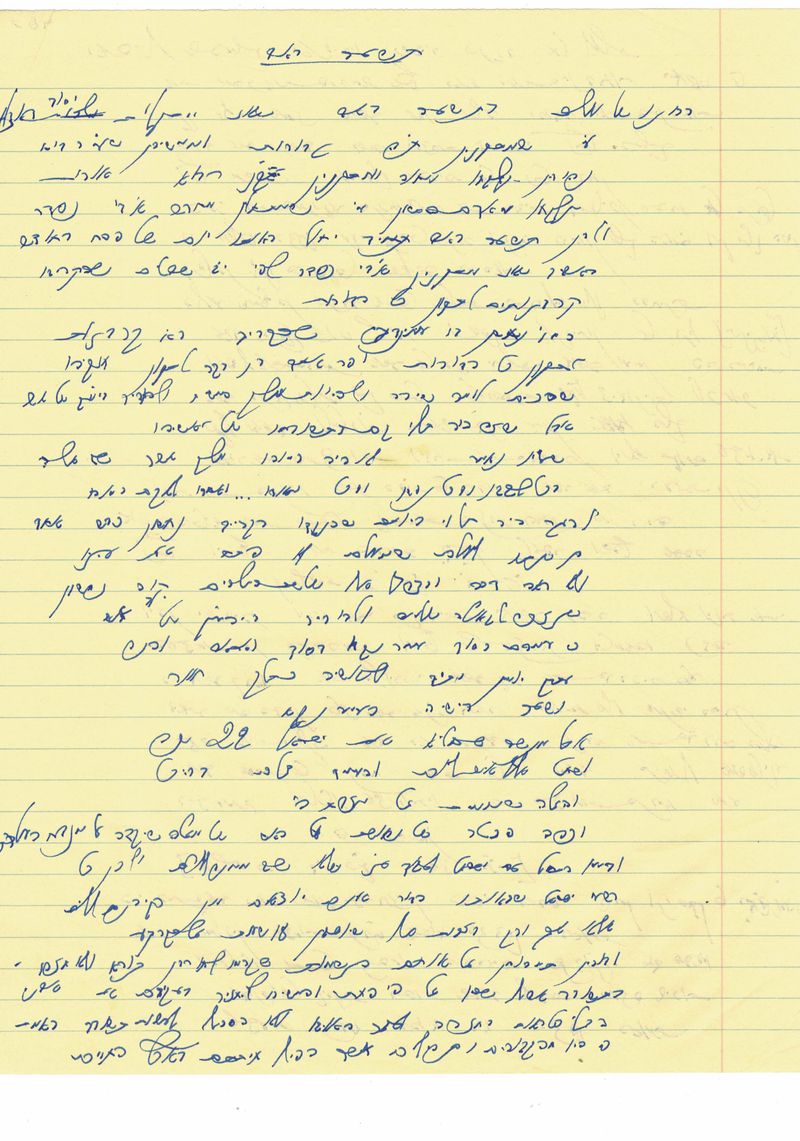
The prayer in the holy handwriting of the Gaon and Tzaddik Rabbi Eliezer Berland shlit"a:
Subscribe to Our Newsletter
Receive Torah articles and inspiration directly in your inbox