The Secret of Mesirus Nefesh: From Queen Esther to Baalei Teshuvah
Class No. 195 | * Wednesday, Parshas Nasso, Eve of 5 Sivan 5759 - Class at the 'Meshivas Nefesh' Yeshiva
How does the mesirus nefesh (self-sacrifice) of Queen Esther connect to the receiving of the Torah at Mount Sinai? An in-depth article on the secret of free will, the parable of the coal miner, and the immense power of baalei teshuvah (returnees to Judaism) who sweeten all the harsh judgments from upon the Jewish people.
Queen Esther approaches King Achashverosh with tremendous mesirus nefesh. The king cannot understand the meaning of her behavior: What does she want? Perhaps she is asking to take someone down from the gallows at the last moment? After all, a person does not risk their life on a suicide mission unless it involves an urgent life-saving matter. Achashverosh waits for her to ask to save a relative, but she risks her life specifically for Haman? The king is losing his mind; he doesn't know who to hang first, and even considers hanging them both together because of her sheer audacity.
Achashverosh's Nightmares
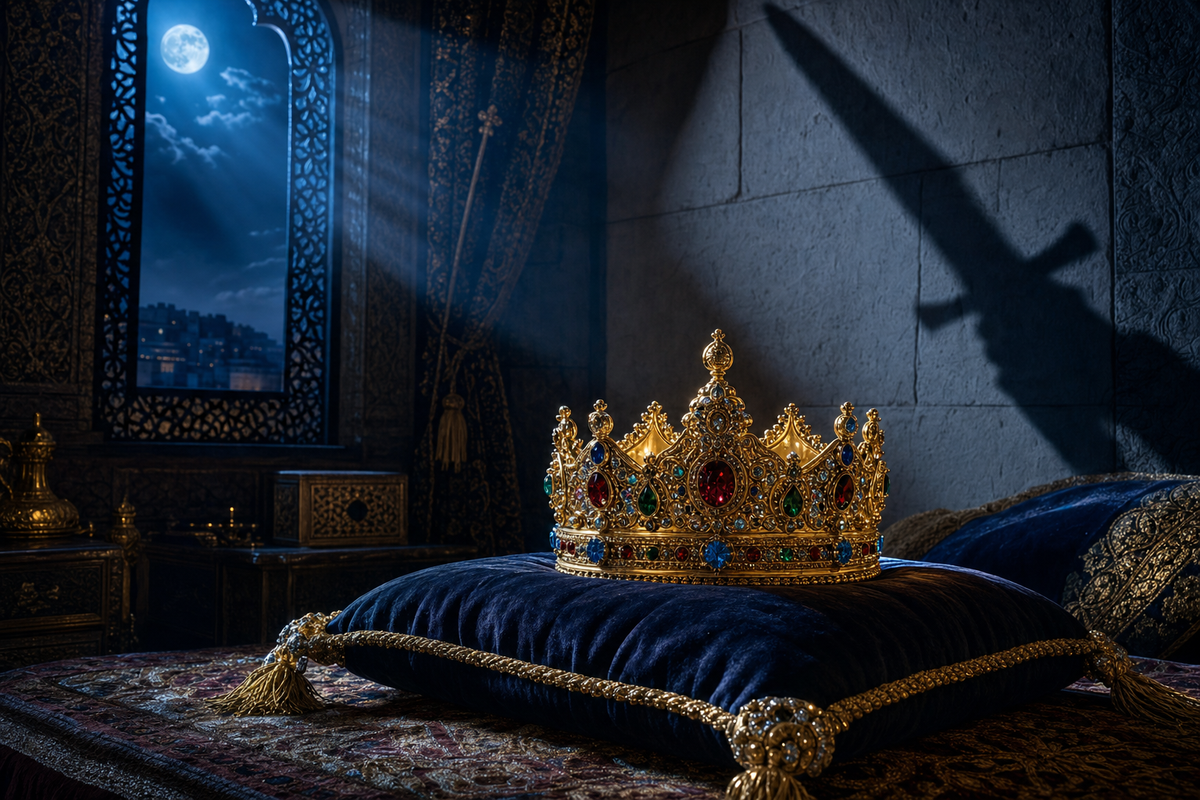
That night, the king's sleep was disturbed. He suffers from nightmares and night terrors in which he sees Haman standing over him with a sword. Just as he wakes up in a panic from the nightmare, he hears a rustling and whispering in the courtyard below his window. He asks who is there, and it turns out to be Haman. Haman had never arrived in the middle of the night. Even his wife Zeresh told him to wait for the morning, but Haman has no patience; he rushes over at midnight to request permission to hang Mordechai. The king, still under the influence of the nightmare, is certain that Haman is climbing a ladder to chop off his head.
Out of fear, the king hastily brings Haman in and asks him: "What should be done for the man whom the king wishes to honor?" Haman, certain that the king is referring to him, suggests giving that person the royal garments, the king's horse, and the royal crown. When Achashverosh hears the word "crown," he nearly falls out of his bed in sheer terror. This confirms all his fears—Haman indeed wants the kingdom! The king is gripped by terror for long hours, and when the time for the second banquet arrives, he feels completely exposed, without bodyguards, sitting across from his greatest enemy who wants to take his crown.
Out of this intense anxiety, Achashverosh turns to Esther and demands to know the truth: "Why did you come? Did you risk your life just for another cup of wine?" Then Esther reveals the bitter truth:
"For we have been sold, I and my people, to be destroyed, to be slain, and to perish."
She explains that if they had been sold as slaves in the coal mines, she would have remained silent, but this is a matter of total annihilation. The foolish and drunken king, who only three days earlier had signed the decree and given Haman his signet ring, boils with rage and asks who did this. He is completely disconnected, with no memory or connection between his actions yesterday and today.
The Secret of Concealment and Free Will at Mount Sinai
Esther is afraid to reveal her origins, but she does not know that Hashem is already preparing all the miracles. The moment a person is born and comes into the world, Hashem has already prepared for them an entire chain of miracles and wonders. However, to merit this, a person is required to have mesirus nefesh. This is the secret of the concealment, and this is also the secret of receiving the Torah, which connects Purim to the holiday of Shavuos and the Book of Ruth.
At the Giving of the Torah, it is said that Hashem "suspended the mountain over them like a barrel." The question arises: Where was the free will of the Jewish people? Imagine a person doing backbreaking labor in the coal mines, carrying rocks in the dark, bruised and scratched. Suddenly, he is taken out of there and brought into a luxurious hotel—the Clouds of Glory, the Pillar of Fire, Miriam's Well filled with precious stones and pearls, and bread from heaven. They tell him: "You will receive all the delicacies in the world, just don't turn on the electricity on Shabbos and eat kosher."
What sane person would give up such abundance? Anyone would agree immediately, just to merit rest and goodness. Because of this, a terrible heavenly accusation was aroused against the Jewish people at the Giving of the Torah: After all, they were taken from the depths of darkness to the pinnacle of light, and therefore their acceptance of the Torah is not considered a true choice. This accusation continued until the holiday of Purim, when they "confirmed and accepted" it willingly.
The Power of Baalei Teshuvah
To sweeten the harsh judgments of the Giving of the Torah, we read the Book of Ruth. Ruth the Moabite came from afar, gave up the royal palace, diamonds, and pearls, and chose to live in abject poverty, sleeping in a leaky hut and gleaning stalks in the field—all for the sake of the Torah.
Ruth symbolizes the entire Jewish people, and particularly the baalei teshuvah. The *baalei teshuvah* are the ones who remove all the harsh decrees from the Jewish people. When there is a claim that Jews only keep the Torah out of habit from their ancestors, the baalei teshuvah come and prove the exact opposite. They leave behind careers, money, status, and comfort, and are willing to live in poverty and hardship, sometimes completely disconnected from their families, solely for the honor of Hashem.
The *baalei teshuvah* merited to hear the Ten Commandments and see Divine visions face to face, because otherwise, it would be impossible to leave behind such worldly desires and do true *teshuvah* (repentance). They cast everything behind their backs, just as Ruth cast aside the royal palace and walked barefoot from the fields of Moab.
This is the shared secret of the holiday of Shavuos and Purim. Queen Esther acted out of the mesirus nefesh of "And if I perish, I perish," and in her merit, Haman was hanged and we received the Torah anew out of love. The baalei teshuvah prove every single day this same mesirus nefesh of "if I perish, I perish." In their merit, the entire Jewish people endures, and in the merit of this mesirus nefesh, we will merit the complete Geulah (Redemption) and to see the Giving of the Torah face to face.
Part 3 of 4 — Class No. 195
Subscribe to Our Newsletter
Receive Torah articles and inspiration directly in your inbox