
The Secret of the Pure Marble Stones: Rabbi Akiva's Path to the Luchos of Atzilus
Lesson No. 143 | Motzaei Shabbos Parashas Nasso, the eve of 13 Sivan 5758 - A lesson for young men at the Third Wall (HaChoma HaShlishis)
A fascinating article on the secret of the Luchos (Tablets of the Covenant) and the difference between the spiritual worlds. Through the journey of Rabbi Akiva, we learn how guarding one's eyes, purity of thought, and overcoming shame are the keys to attaining the highest levels of Torah.
The Tikkunei Zohar reveals a tremendous secret about the receiving of the Torah and the Luchos. It turns out that there are different types of Luchos: there are Luchos from the world of Asiyah (Action), Luchos from the world of Yetzirah (Formation), Luchos from the world of Briah (Creation), and Luchos from the world of Atzilus (Emanation).
When this deep secret was revealed to Rabbi Shimon bar Yochai and his circle of disciples, Rabbi Elazar asked his father: What is the meaning of the concept "pure marble stones"? What did Rabbi Akiva mean when he warned his students:
"When you reach the pure marble stones, do not say, 'Water, water,' lest you endanger yourselves, as it is stated, 'He who speaks lies shall not be established before My eyes.'"
The holy Zohar (Tikkun 40) explains that the "pure marble stones" symbolize the two Luchos that we received on the holiday of Shavuos. Every person, according to their level of sanctification and guarding of the eyes, merits Luchos from a different spiritual world. Rabbi Akiva turned to his students and told them: If you want to merit the Luchos from the world of Atzilus, to ascend to the level of the first Luchos made by Moshe Rabbeinu (the "Faithful Shepherd"), you must know how to approach that supernal sanctuary in Heaven.
The Purity of the Shepherd
How did Rabbi Akiva himself merit to reach these peaks? The secret lies in his character traits and his purity. Rabbi Akiva would overlook offenses against him, absorbing all the insults and mockery directed at him in silence. Until the age of forty, he was a simple shepherd, and if not for his righteous wife, Rachel the daughter of Kalba Savua, he would never have learned Torah.
Kalba Savua was one of the three wealthiest men in Jerusalem (along with Nakdimon ben Gurion and Ben Tzitzis HaKeses), wealthy individuals who had the means to support all of Jerusalem for twenty-two years. When he discovered that his daughter had chosen to marry a simple shepherd, instead of the most brilliant prodigy among the students of Rabban Yochanan ben Zakkai or Rabbi Eliezer HaGadol, he lost his mind and disinherited her from all his properties.
The Gemara in Tractate Kesubos asks: What did Rachel actually see in that shepherd?
"The Gemara answers: She saw that he was modest and excellent."
Rachel recognized his absolute guarding of the eyes. He would walk with the sheep with his eyes cast downward. There was no evil thought in him whatsoever. His mind was purer than all the Torah scholars. She saw the holiness on his face and in his eyes; she saw a holy and pure light moving around him. He did not even look at her and did not know who he was marrying, exactly like Yaakov Avinu in his time.
Overcoming the Shame
Rachel agreed to marry him on the condition that he would go learn Torah. But Rabbi Akiva was afraid: "How can I go learn Torah now? At the age of forty I will start learning? To sit in the 'cheder' (Torah classroom) with little three-year-old children? Everyone will laugh at me."
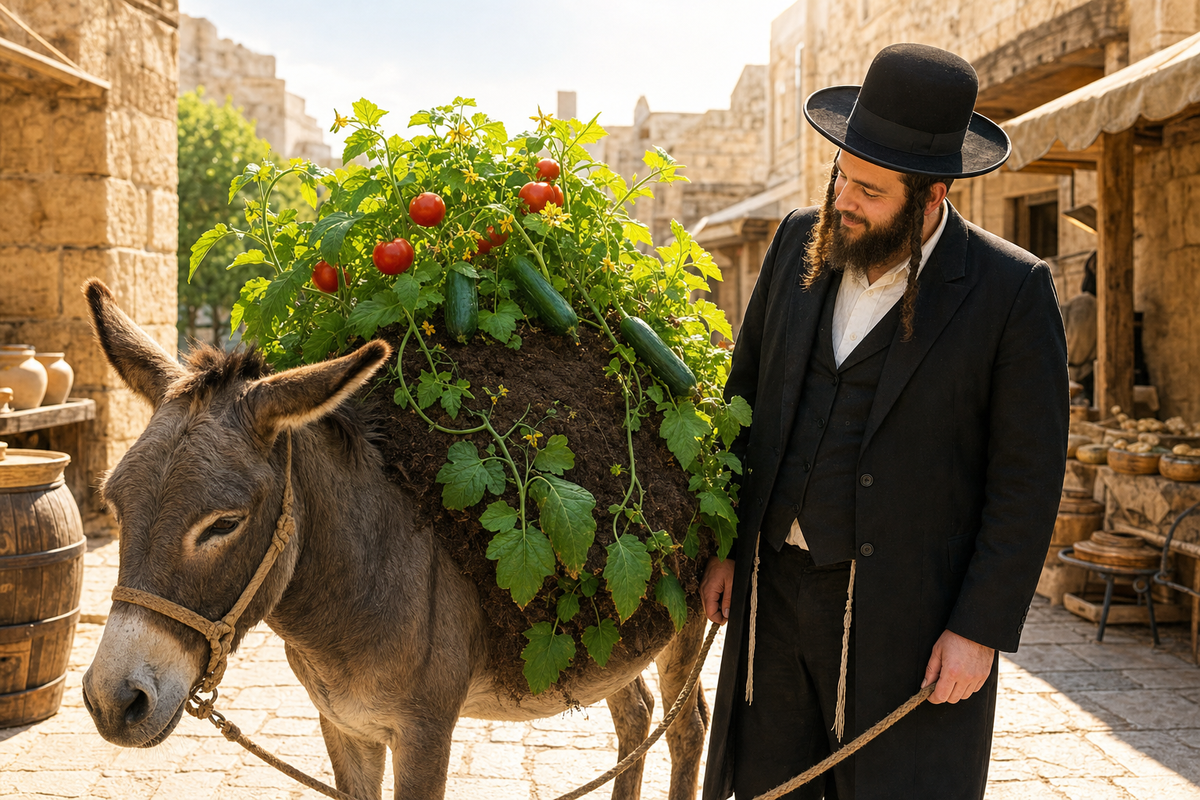
To help him overcome the shame, Rachel did a clever thing, which is brought down in the Midrash HaGadol. She took a donkey that had a deep wound on its back, filled the hole with dirt, and planted tomatoes and cucumbers in it. She said to Rabbi Akiva: "Let's go out to the market with this donkey."
The people in the market saw the spectacle and started laughing at the "crazy people" who plant vegetables on a donkey's back. They laughed on the first day, they laughed on the second day, but by the third day, they had already gotten used to the sight and stopped laughing.
Rachel said to him: "You will go to the yeshiva, they will laugh for a day, they will laugh for two days that a forty-year-old elder has come to learn, and from the third day they will stop laughing." With the help of this parable, she convinced him. He overcame his shame and went to learn.
From Aleph-Beis to the Secret of the Luchos
Rabbi Akiva did not even know how to read and write. It is brought in Avos d'Rabbi Nassan that he went to learn together with his young son. They both sat together and the teacher told them: "This is an Aleph, this is a Beis, this is a Gimmel." Thus, out of tremendous humility, he began his path.
From that modest beginning, he elevated himself and attained the levels of all the Tanna'im and Amora'im. After meriting to reach the highest spiritual peaks, he was able to guide his students in the secret of the Luchos.
"When you want to reach the pure marble stones, to the secret of the Tablets from the world of Atzilus (the highest spiritual realm of Emanation)," Rabbi Akiva taught them, "you must know that everything depends on purity and sanctification." The Tablets are not merely physical stones, but a spiritual reality that every person can merit to attain, if only he walks in the path of Rabbi Akiva – a path of guarding the eyes, purity of thought, and mesirus nefesh (self-sacrifice) for the Torah without any shame.
Part 3 of 4 — Lesson No. 143
Subscribe to Our Newsletter
Receive Torah articles and inspiration directly in your inbox