
Rabbi Berland shlit"a in a Class for Central Region Residents: "If You Are Not Moving Forward — You Are Moving Backward"

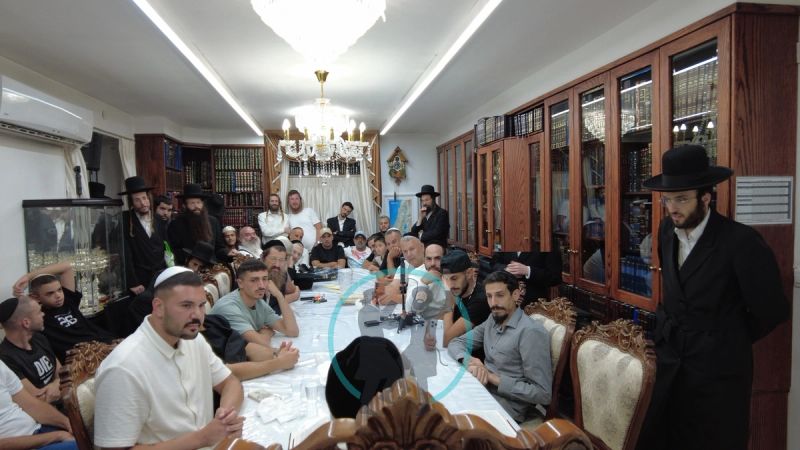
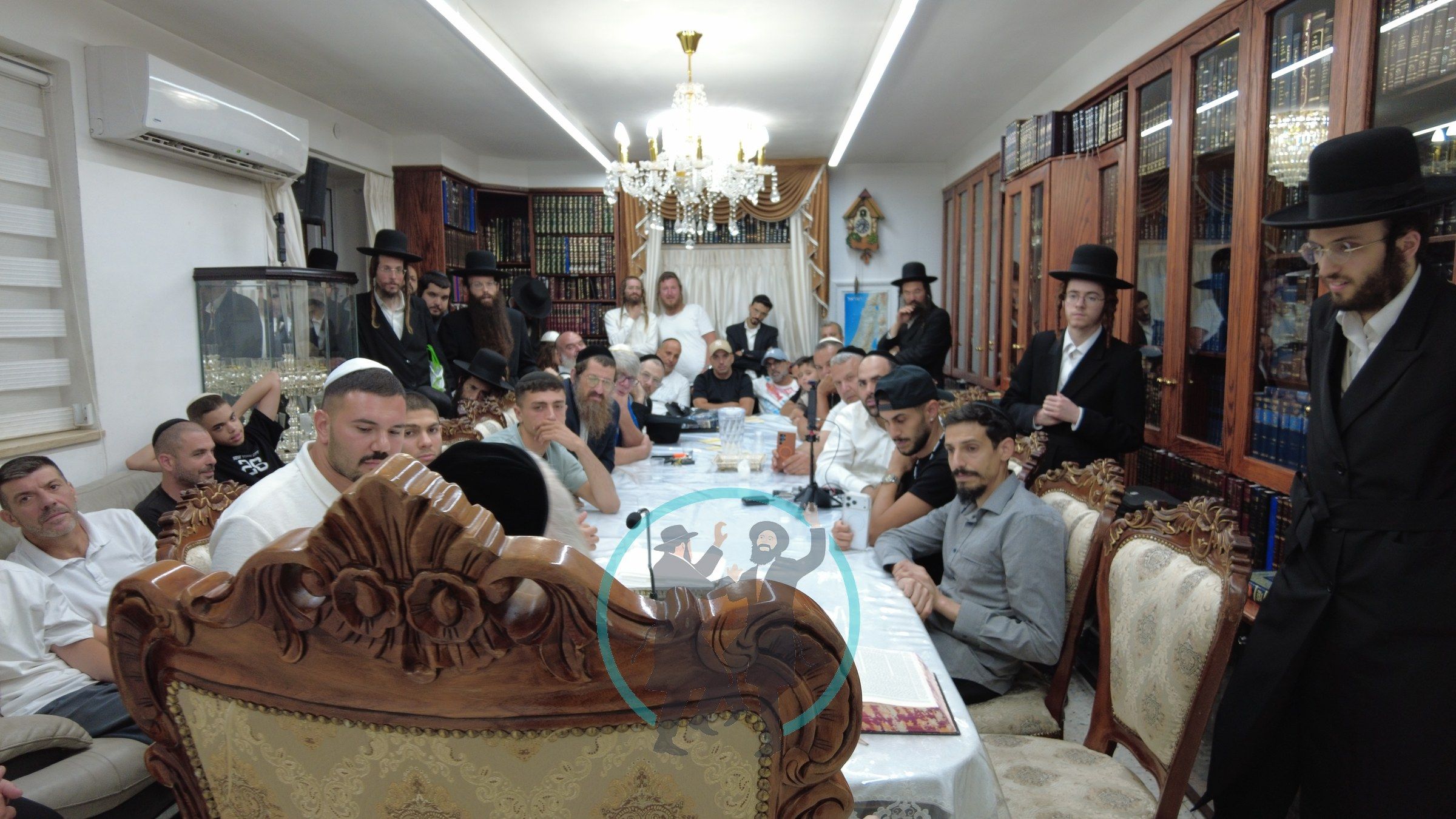
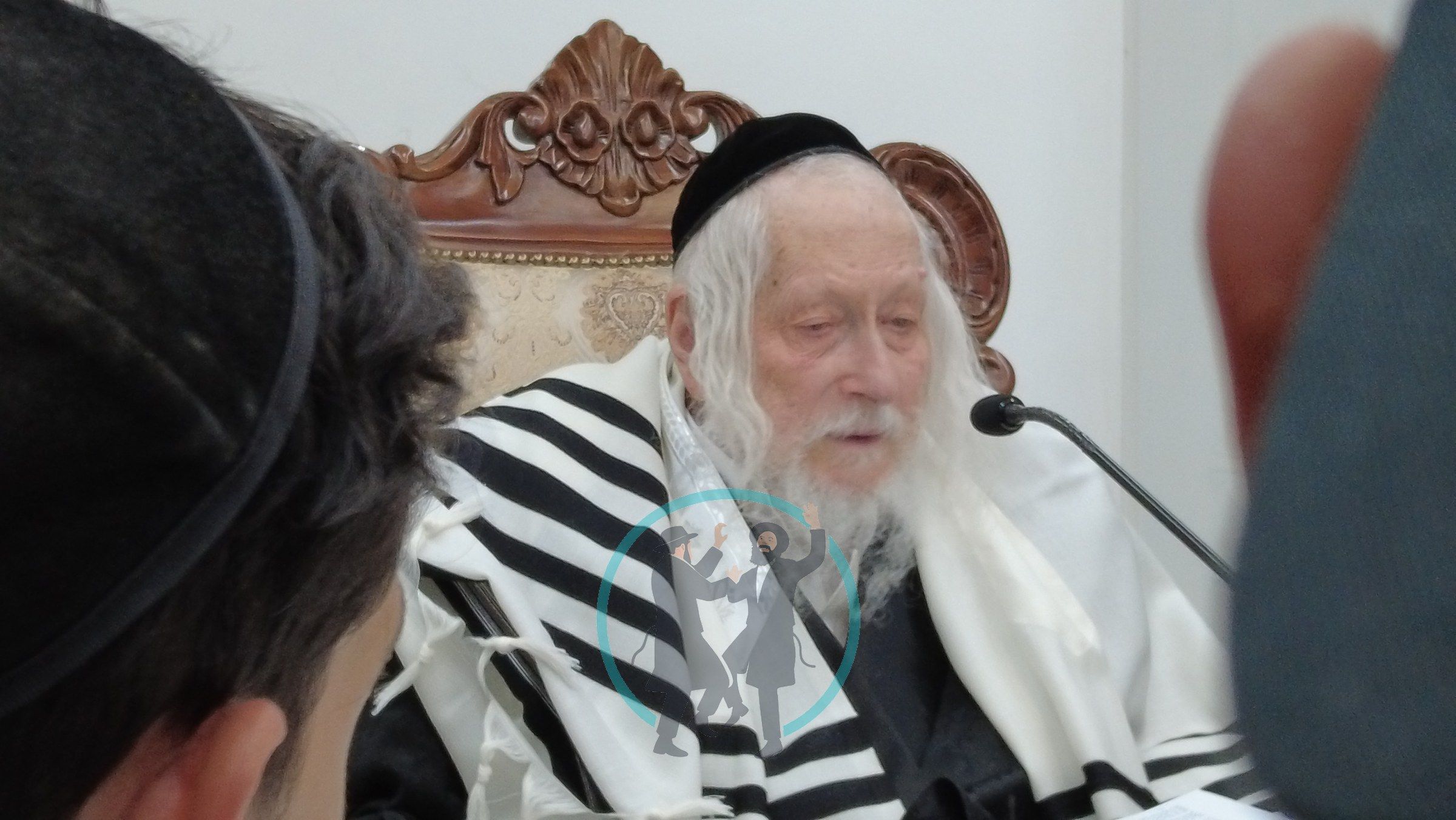
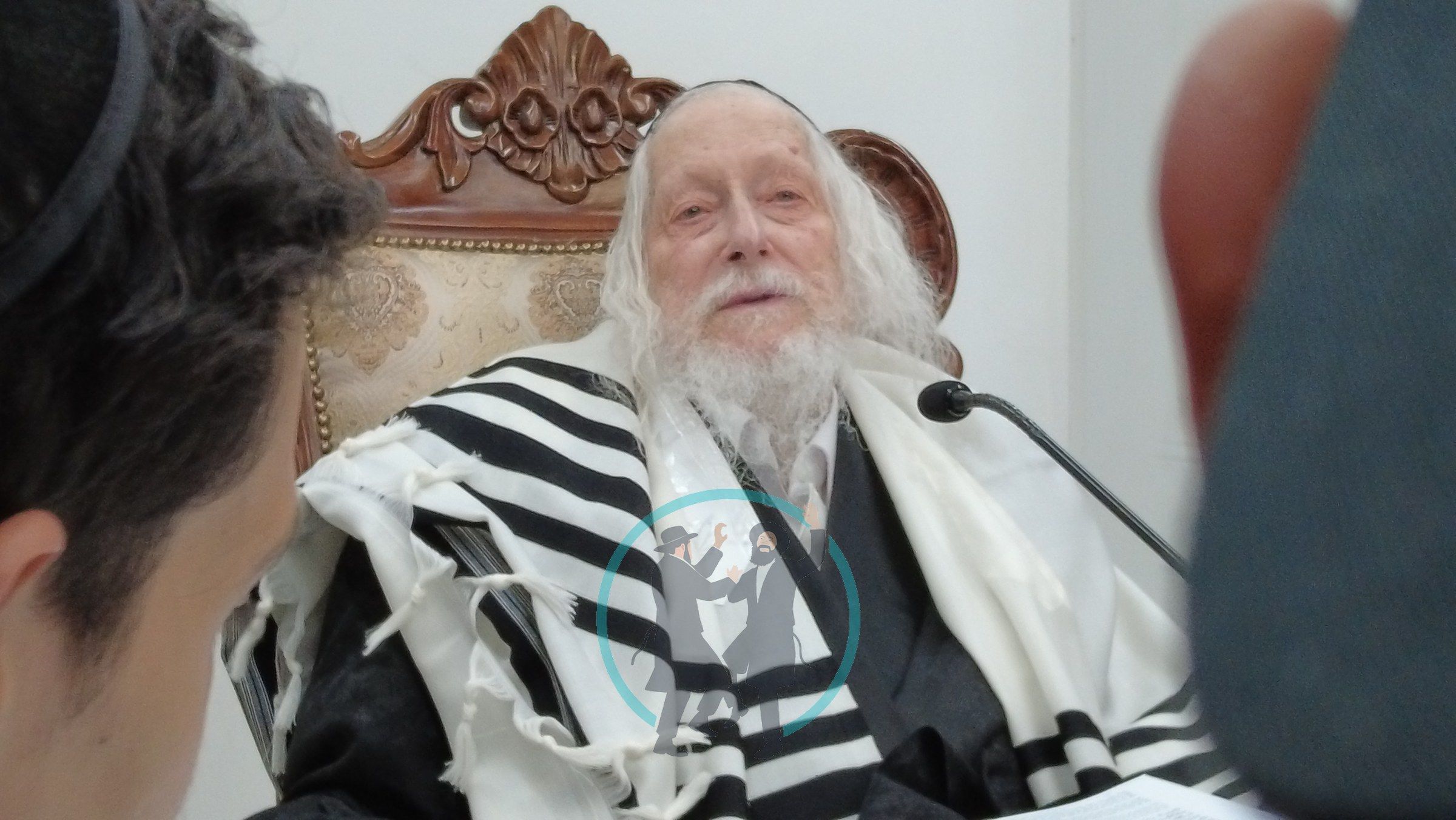
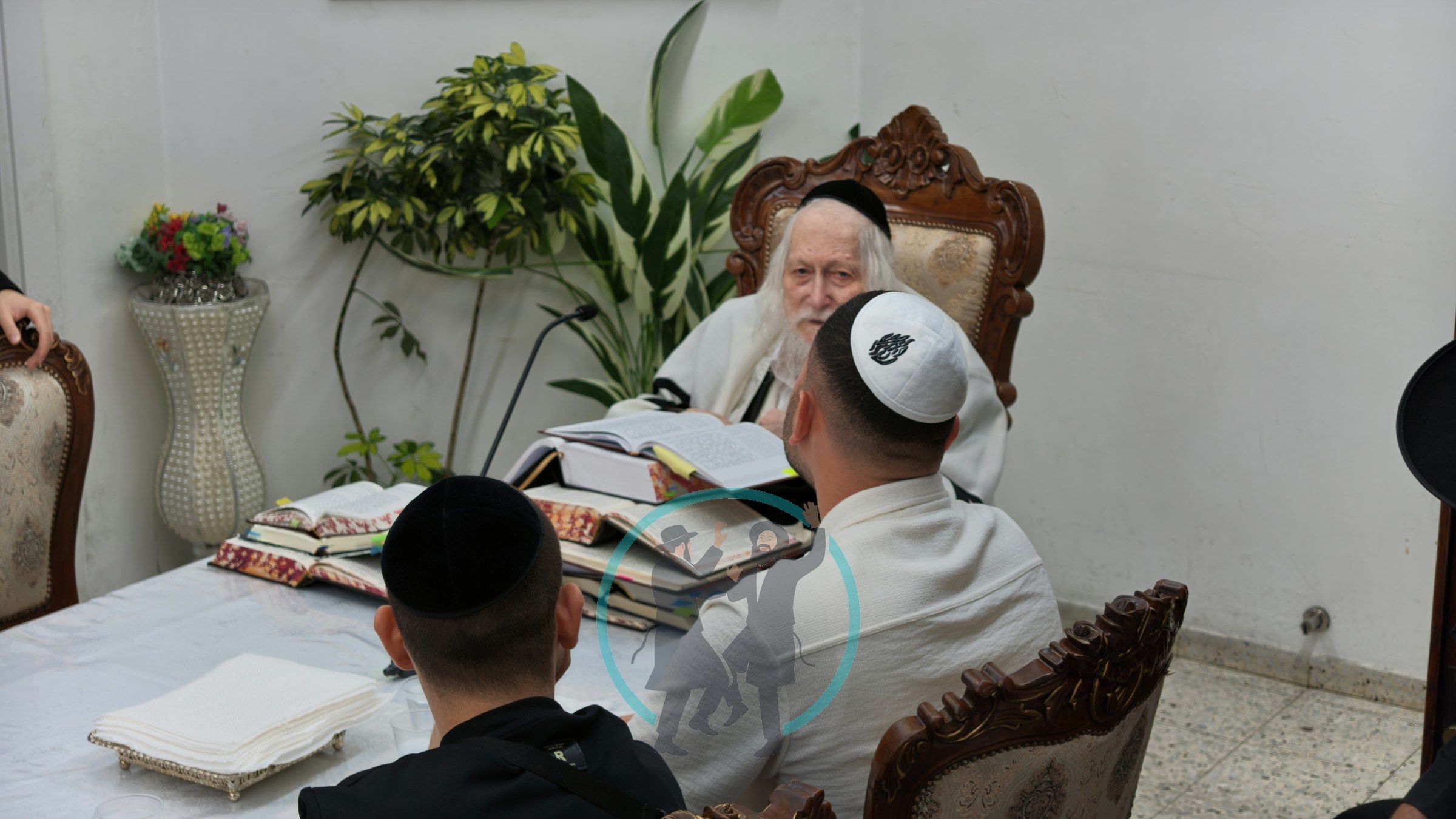
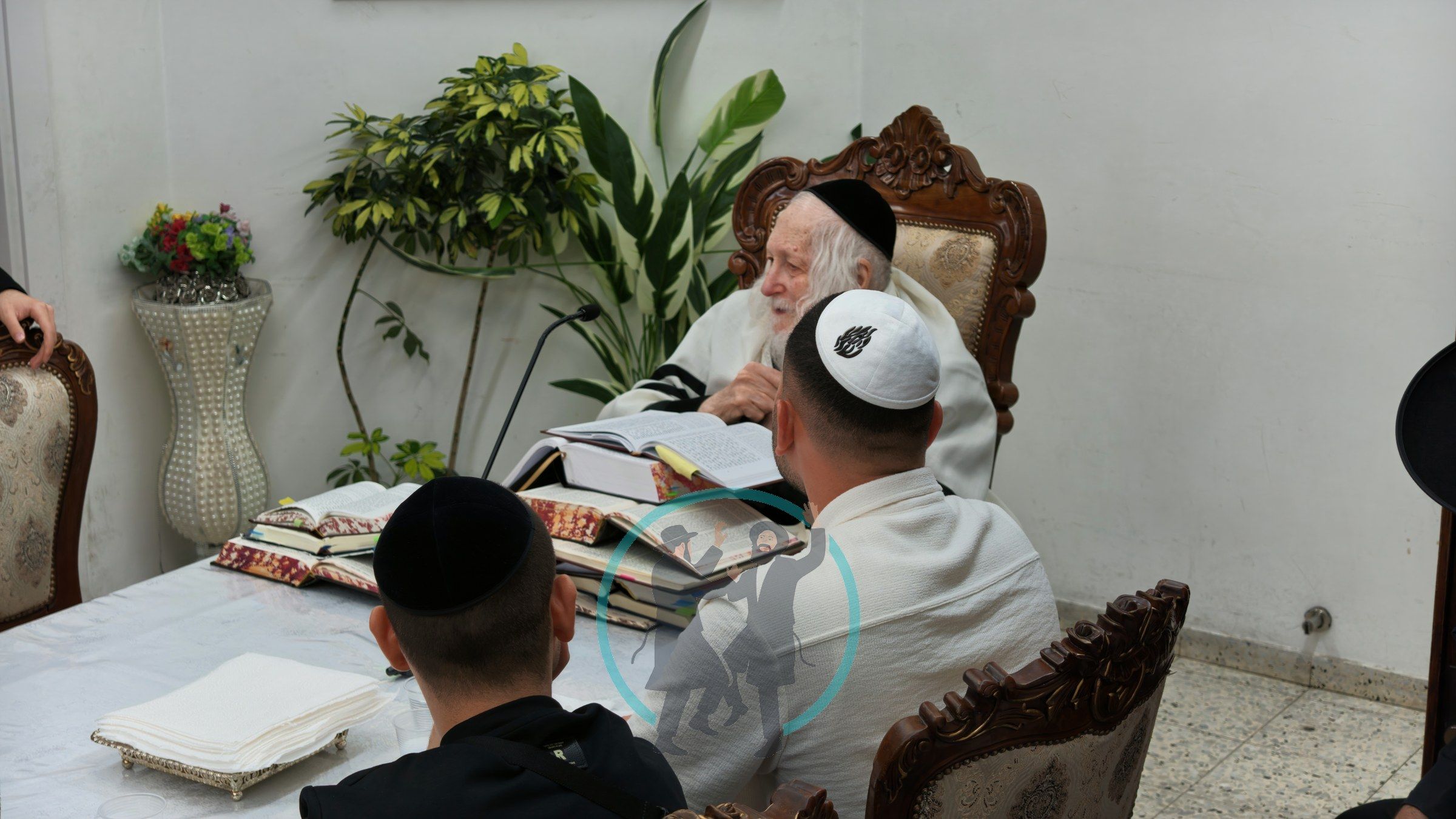
On the 20th of Av 5786, during the week of Parshas Re'eh, residents of the central region gathered at the home of Rabbi Berland shlit"a for a Torah class. The Rav opened with the ladder of Jacob our Patriarch and the holiness of Beis El, moved on to the immense size of the stones from which Jerusalem is destined to be built, and from there to the figure of Reish Lakish — who channeled all his strength into Torah. Throughout the entire class, one fundamental principle echoed repeatedly: whoever is not moving forward, is moving backward.
Jacob's Ladder — Eight Thousand Parsa'os
Rabbi Berland shlit"a opened with the ladder that Jacob our Patriarch saw in his dream, expanding on its immense size according to the Gemara in Tractate Chullin (91b) — the very page being studied these days in the Daf Yomi. The width of the ladder was eight thousand parsa'os (persangs), and four angels were ascending and descending on it, each one of them two thousand parsa'os wide. This was no imaginary dream, but a complete reality that opened up before him.
From there, the Rav dwelt on the holiness of the place itself. Jacob our Patriarch ascended the ladder all the way to heaven, and arrived at Beis El — which is Luz. In those places, Rabbi Berland shlit"a said, it is possible to resurrect the dead through the tzaddik. The power of the tzaddik is not limited to what the eye can see.
"There Jacob saw, he was on the ladder... he went up with the ladder all the way to heaven, and arrived at Beis El."

"There Is No Such Thing" — The Thirty-Cubit Stones of Jerusalem
From there, the Rav moved to the well-known story of Rabbi Yochanan's student. Rabbi Yochanan taught that the stones of Jerusalem are destined to be thirty cubits — fifteen meters for a single stone. The student heard this and did not believe it: Where in the world is there a precious stone of such a size? "There cannot be such a thing, there is no such thing" — and he mocked him in his heart.
Days later, that student set sail on the sea, and suddenly the sea split open before him — and he saw with his own eyes the angels sawing those exact stones. What had seemed impossible to him existed all along; only his eyes had not been open to see it. This is the same fundamental principle that the Rav delivered at the gathering for yeshiva students during Bein HaZmanim last week — the prophecy about Jerusalem being built from precious stones is not a metaphor, but a truth that will be revealed eye to eye.
"He said: There cannot be such a thing, there is no such thing. So he mocked him in his heart."
Reish Lakish — The Strength Itself Was Not Disqualified
Reish Lakish was the leader of the bandits, possessing immense physical strength — to the point that he could leap and jump across the Jordan River. When Rabbi Yochanan saw him, he did not tell him to abandon his strength, nor did he break him. He told him: Take this very strength and dedicate it to Torah.
The Rav emphasized the measure of this dedication: "Sit and study Torah — eighteen hours, twenty hours a day." The strength within him was not disqualified or thrown away; it was merely redirected toward a different goal. Every person, the Rav said, has such strength within them — the only question is where they direct it.
"You know how to jump the Jordan — sit and study Torah... eighteen hours, twenty hours a day."
"You May Not Want to Be Abraham — But Do Not Be Terach"
And from here to the foundation that echoed throughout the entire class: There is no middle ground. A person who is not moving forward is not standing still, but rather moving backward. The Rav addressed those sitting before him with simple, sharp words: You may not seek to be Abraham our Patriarch — but do not be Terach, his father.
"You may not want to be Abraham — but do not be Terach."

Abraham Our Patriarch and Nimrod — When He Emerged from the Cave
The Rav spoke about Abraham our Patriarch, who was hidden in a cave from Nimrod. There, inside the cave, without a teacher and without a book, he came to know his Creator. And when he emerged and saw the sun in all its power — he understood that there is a Master to the universe. Unique in his generation, with no one to teach him, he found the truth through his own power.
Practical Halacha — Do Not Leave Prayer Immediately
Amidst these words, the Rav delivered a practical Halacha (Jewish law): It is written in the Shulchan Aruch that it is forbidden to leave prayer immediately upon its conclusion. One must say something — a psalm, some words of Torah — and only then leave. This is also ruled by the Mishnah Berurah. One does not simply get up and walk away from prayer like someone who has been dismissed from a chore.
Everything is from Hashem
And from here to the simple foundation of Emunah (faith) that the Rav repeated: Nothing happens on its own. Everything a person does, at every hour and in every place — everything is from the hand of Hashem.
"Hashem is God — everything you do is Hashem."
5689 (1929) — One Hundred Years in Just Three More Years
The Rav mentioned that this Shabbos marks the anniversary of the pogroms of the year 5689 (1929), noting that in exactly three years, it will be exactly one hundred years since those events. He briefly described the days of the British Mandate that preceded them — days when it was impossible to bring books or pass through safely, "worse than it was under the Turks" — until the riots broke out. We have expanded elsewhere on the Hebron of those days and what remains of it.
A Practical Message
There is no standing still — Whoever is not moving forward is moving backward. "You may not want to be Abraham — but do not be Terach."
Your strength is not disqualified — Like Reish Lakish, who jumped the Jordan and gave that very same strength to the Torah.
What seems impossible — exists — The student mocked the thirty-cubit stones, until the sea opened and showed him the angels sawing them.
Do not leave prayer immediately — Say a psalm or something before you get up, as brought down in the Shulchan Aruch and the Mishnah Berurah.
Everything is from Hashem — "Everything you do is Hashem."
Photo Gallery from the Class



Subscribe to Our Newsletter
Receive Torah articles and inspiration directly in your inbox